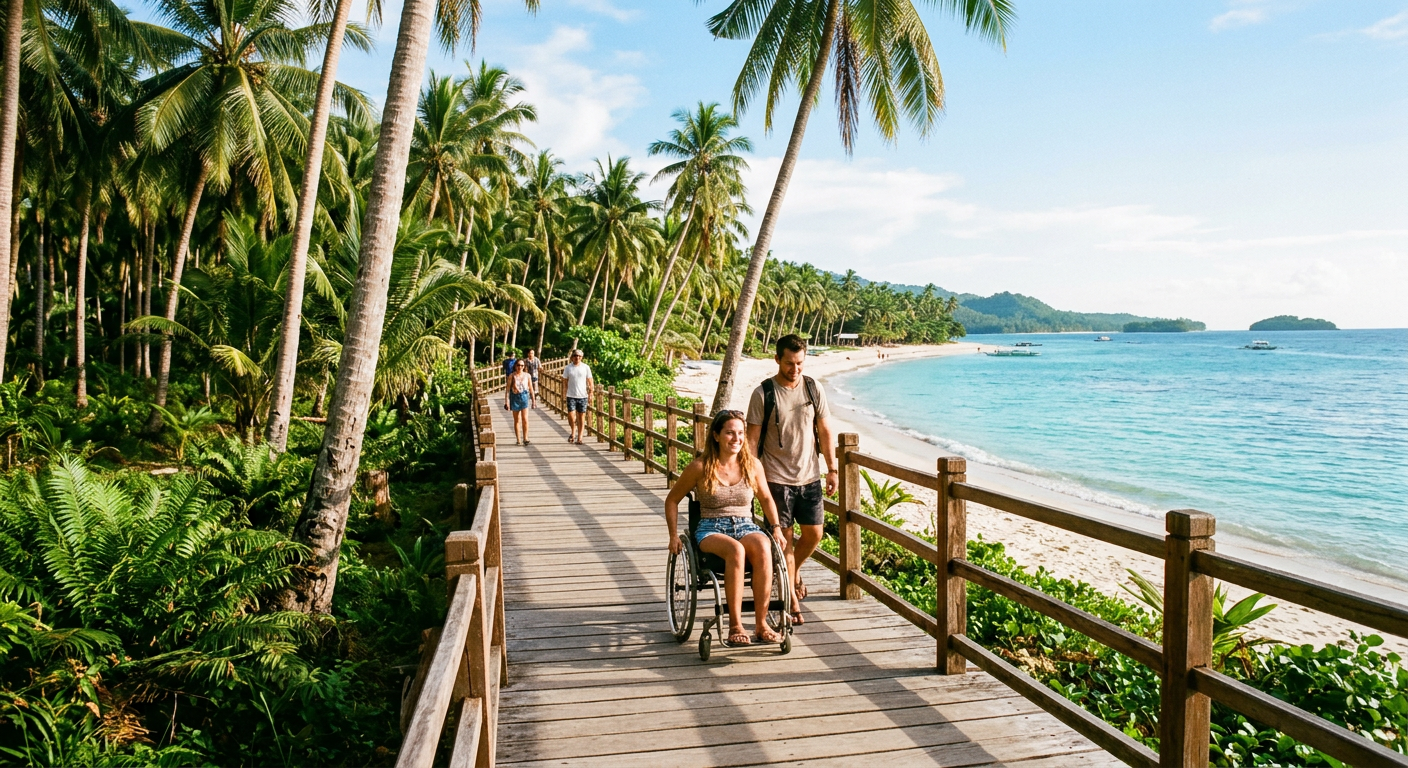
Siquijor Accessible Travel Guide: Tips for Travelers with Mobility Needs
Plan an accessible trip to Siquijor Island. Practical information on wheelchair-friendly accommodations, accessible attractions, transportation options, and tips for travelers with disabilities.
Honest Expectations
Siquijor is a developing island province in the central Philippines, and it would be misleading to suggest that it meets the accessibility standards you might find in Singapore, Tokyo, or major European cities. Sidewalks are narrow or nonexistent in most areas. Many attractions involve uneven terrain, steep stairs, or jungle trails. Public transportation is not wheelchair accessible. Construction standards for accessibility features are inconsistently enforced.
That said, Siquijor is far from impossible for travelers with mobility limitations. The island’s flat coastal road, compact size, accommodating local culture, and growing tourism infrastructure mean that with proper planning, travelers with various accessibility needs can have meaningful, enjoyable experiences on the island. This guide provides honest, practical information to help you plan accordingly.
Getting to Siquijor: Ferry Accessibility
All visitors to Siquijor arrive by ferry (commercial flights are available from Cebu but have limited frequency). The accessibility experience varies significantly depending on which ferry company and route you choose.
Oceanjet and Montenegro Lines
Oceanjet operates fast ferries from Dumaguete to Siquijor (approximately 1 hour) and from Tagbilaran, Bohol. These are the most modern vessels serving the route.
Wheelchair access: Oceanjet fast ferries have flat boarding ramps at most terminals, though assistance is usually needed. The Dumaguete terminal has a relatively flat approach from the ticketing area to the boarding gate. Staff are generally willing to assist with boarding, though there is no formal accessibility protocol.
Inside the vessel: Aisles between seats are narrow. Standard seating does not accommodate wheelchairs, but business class sections offer more space. Restrooms onboard are not wheelchair accessible.
Montenegro Lines operates slower RORO (roll-on, roll-off) ferries that carry vehicles. These ferries have vehicle ramps that are easier to navigate in a wheelchair than the passenger gangways of fast ferries. If you are traveling with a vehicle adapted for accessibility, the RORO ferry is your best option.
At Siquijor Ports
Siquijor has two main ports: Siquijor town (used by Oceanjet) and Larena (used by Montenegro and some Oceanjet services). Both ports have basic terminal buildings with flat access from the arrival area to the road where tricycles and vehicles wait.
Key tip: Arrange private vehicle pickup in advance rather than relying on finding accessible transportation at the port. Your accommodation can usually arrange this.
Getting Around the Island
Transportation is typically the biggest accessibility challenge on Siquijor. Understanding your options allows you to plan effectively.
Private Vehicle Rental with Driver
This is the most accessible transportation option on Siquijor and the one most recommended for travelers with significant mobility limitations. A private multicab (small pickup truck with covered passenger area) or van with a driver can be arranged through your accommodation or through tour operators.
Cost: Approximately 2,500 to 3,500 PHP per day for a full island tour with driver (as of early 2026). Half-day rates are available.
Advantages: You control the itinerary and pace. The driver can drop you as close as possible to attractions. You avoid the accessibility challenges of tricycles and motorcycles.
Arrangement: Book at least one day ahead through your hotel or resort. Specify your accessibility needs so the operator can select an appropriate vehicle. Some resorts have SUVs or vans that are easier to enter than the low-clearance multicabs.
Tricycles
Tricycles (motorcycles with attached passenger sidecars) are the default public transport on Siquijor. They are not accessible for wheelchair users. The sidecar opening is narrow, the seat is low, and entering and exiting requires stepping over a high threshold.
For travelers with moderate mobility limitations who can manage the step-in, tricycles are functional but uncomfortable for longer journeys. The ride quality is rough on secondary roads.
Motorcycles and Scooters
Self-drive motorcycles are the most popular way for tourists to explore Siquijor. This option is only viable for travelers who can safely operate a motorcycle without mobility adaptations.
Accommodation: What to Look For
Siquijor’s accommodation ranges from basic bamboo huts to mid-range resorts. True wheelchair-accessible rooms with roll-in showers, grab bars, and appropriate door widths are extremely rare. However, several types of accommodation offer practical accessibility advantages.
Ground-Floor and Single-Level Properties
Many Siquijor accommodations are single-story or offer ground-floor rooms. This eliminates stair-climbing, which is the most common barrier. When booking, specifically request a ground-floor room and confirm there are no steps at the entrance.
Properties with Paved or Concrete Paths
Resorts with paved pathways between rooms, the restaurant, and the pool or beach area are significantly easier to navigate than those with sand or gravel paths. Check satellite views and guest photos to assess the layout.
Recommended Areas
San Juan is the most developed tourist area on Siquijor and has the highest concentration of mid-range to upscale accommodations. Properties here are more likely to have paved paths, level access, and staff experienced with international travelers who may have accessibility needs.
Siquijor Town offers flatter terrain and proximity to the port, making arrival logistics simpler. The town center has paved sidewalks in some areas, though they are often narrow and occasionally blocked.
Questions to Ask Before Booking
- Are there steps at the room entrance? How many?
- Is the path from the parking area or reception to the room paved?
- What is the bathroom situation? Is there a step into the shower? Is it a Western-style toilet or squat toilet?
- Is the restaurant or dining area on the same level as the rooms?
- Can the property arrange private vehicle transportation?
Most Siquijor accommodation owners are responsive and honest when asked specific questions about their facilities. Email or message in advance with your specific needs.
Accessible Attractions and Activities
Not every Siquijor attraction is accessible, but several of the island’s highlights can be enjoyed by travelers with various mobility levels.
Fully Accessible or Minimal Assistance Needed
Paliton Beach - One of Siquijor’s most beautiful beaches, Paliton has a relatively flat approach from the road. The beach itself is a mix of sand and smooth stones. While not paved, the terrain from the parking area to the shore is manageable with assistance. The beach is flat and calm, making it one of the more accessible coastal spots on the island.
Siquijor Town Waterfront - The waterfront promenade in Siquijor town is paved and flat, offering pleasant views of the sea and passing boats. Several restaurants and cafes along this stretch have ground-level access.
Lazi Church and Convent - The exterior of the San Isidro Labrador Church and the adjacent Lazi Convent can be viewed from the flat plaza area. The church entrance has a few steps, but the main visual and historical experience is accessible from ground level. The convent museum, located on the second floor, is not accessible by elevator.
Scenic Driving Tour - The 75-kilometer circumferential road that circles Siquijor is paved and offers continuous ocean and mountain views. Experiencing the island from a private vehicle allows you to see the changing landscapes, stop at viewpoints, and visit the six municipal towns without leaving the road.
Capilay Spring Park - Located in San Juan, this freshwater spring park has some paved pathways and flat grassy areas. The main spring pool can be viewed from a level vantage point without descending stairs.
Partially Accessible (Some Assistance Required)
Old Enchanted Balete Tree - The famous centuries-old fig tree is accessed from the main road via a short, relatively flat path. The main viewing area is at ground level. The fish spa pool at the base of the tree requires descending a few steps, but viewing the tree itself is possible without them.
San Juan Beach Area - The stretch of beach and beachfront establishments along the San Juan coast varies in accessibility. Some beachfront restaurants have ramped or level entry. The beach itself is sandy and flat in most sections.
Tubod Marine Sanctuary Viewing Area - While entering the water at the marine sanctuary requires navigating a rocky shoreline, the adjacent beach area and surrounding restaurants offer views of the protected area from level ground.
Not Accessible (Significant Physical Barriers)
Cambugahay Falls - The famous tiered waterfall requires descending over 130 steep, uneven stone steps through jungle terrain. There is no alternative access route. This attraction is not accessible for wheelchair users or travelers with significant mobility limitations.
Cantabon Cave - The spelunking experience involves climbing, crawling through narrow passages, and wading through underground streams. Not accessible.
Salagdoong Beach - The main beach area is reached via a steep descent with stairs. The cliff jumping platforms require hiking over rocky terrain.
Mount Bandilaan - The hiking trails on Siquijor’s highest peak involve elevation gain, uneven paths, and jungle terrain.
Lugnason Falls and Other Interior Waterfalls - All of Siquijor’s interior waterfalls require hiking on unpaved, often steep trails.
Practical Tips
Medical Considerations
Siquijor has a provincial hospital in Siquijor town and smaller health centers in each municipality. Medical facilities are basic compared to mainland cities. If you have conditions that might require specialized medical attention, be aware that emergency evacuation to Dumaguete (the nearest city with a full-service hospital) takes approximately one hour by fast ferry, longer during rough seas.
Bring sufficient medication for your entire stay plus extra days in case of weather-related ferry cancellations. Pharmacies on Siquijor stock basic medications but may not carry specialized prescriptions.
Power and Charging
If you use powered mobility equipment, be aware that power outages still occur on Siquijor, though they have become less frequent. Bring portable battery packs for essential devices. Most accommodations have backup generators, but confirm this when booking.
Communication
Most Siquijor accommodations and restaurants have WiFi, and mobile data coverage (Globe and Smart networks) is available across most of the island. This makes it possible to communicate accessibility needs in real time and arrange transportation as needed.
Local Attitudes
Filipino culture, and Siquijor culture in particular, places high value on hospitality and helping others. You will find that locals are generally willing to assist travelers with disabilities, often going out of their way to help. However, this helpfulness is informal rather than systematic. Do not expect trained accessibility assistance, but do expect genuine kindness and willingness to problem-solve.
Staff at restaurants and accommodations will often improvise solutions: carrying items, moving furniture to create wider paths, helping with steps. Communicating your specific needs clearly and gratefully tends to produce excellent results.
Hiring a Local Assistant
For travelers who need regular physical assistance, hiring a local guide or assistant for the duration of your stay can significantly improve the experience. Your accommodation can usually recommend someone reliable. Expect to pay 800 to 1,500 PHP per day for a personal assistant or companion who can help with transportation logistics, carrying items, navigating terrain, and communicating with locals.
Planning Your Accessible Itinerary
A realistic accessible itinerary for Siquijor focuses on the experiences that the island does well for all ability levels.
Day 1: Arrival and San Juan
Arrive by ferry with pre-arranged vehicle pickup. Settle into your accommodation. Spend the afternoon at Paliton Beach or the San Juan beach area. Evening dinner at a beachfront restaurant.
Day 2: Coastal Tour
Full-day private vehicle tour of the island’s circumferential road. Key stops: Lazi Church and Convent (exterior), Siquijor town waterfront, Capilay Spring Park, Old Enchanted Balete Tree. Lunch at a roadside restaurant. The driving itself is the experience, with continuous scenery changes.
Day 3: Relaxation and Culture
Morning at the beach or pool. Visit a local market if timing aligns (Siquijor town market is most active in the morning). Afternoon spa treatment at your resort or a local wellness center. Many massage and spa services can be arranged at ground-floor or in-room settings.
The Bigger Picture
Siquijor’s accessibility infrastructure is limited, and it would be irresponsible to pretend otherwise. But accessibility is not binary. Between “fully wheelchair accessible” and “impossible” lies a wide spectrum of experiences that travelers with various mobility levels can enjoy with proper planning, realistic expectations, and the willingness to adapt.
The island’s greatest accessibility asset is its people. Siquijodnons are problem-solvers by nature, accustomed to making things work with limited resources. When you communicate your needs clearly, you will find a community ready to help you experience their island in whatever way works for you.
As tourism on Siquijor continues to grow, there are encouraging signs that accessibility is entering the conversation. Newer accommodations are more likely to consider level access in their designs. The provincial government has expressed interest in making key attractions more accessible. These changes are gradual, but they point in the right direction.
For now, traveling to Siquijor with mobility limitations requires extra planning, flexibility, and acceptance that some experiences will be off-limits. But the experiences that remain available, including the island’s beaches, coastal scenery, historic churches, local culture, and above all the warmth of its people, make the effort worthwhile.
Related Travel Guides
First-Timer Mistakes in Siquijor: 15 Things to Avoid on Your Trip
Avoid the most common tourist mistakes in Siquijor. From ferry booking blunders to sunscreen sins, this guide helps first-time visitors plan a smoother island experience.

Siquijor Pet-Friendly Travel Guide: Bringing Your Dog to the Island
Everything you need to know about traveling to Siquijor with your pet. Covers ferry rules, pet-friendly accommodations, veterinary services, beaches, and practical tips for dog owners visiting the island.

What to Pack for Siquijor: The Complete Packing Checklist for 2026
The definitive packing list for Siquijor Island. Covers clothing, gear, toiletries, electronics, and essentials for dry season, rainy season, and every type of traveler from backpackers to families.