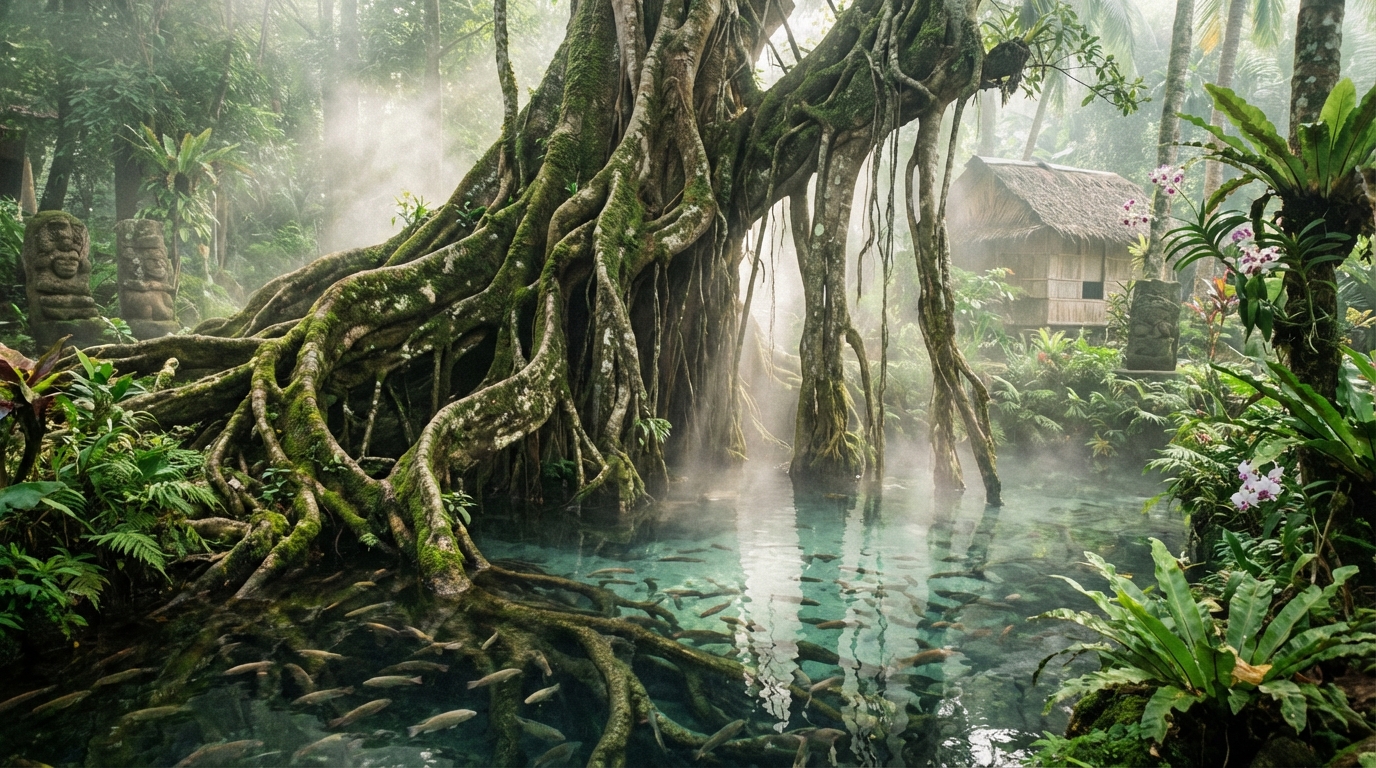
Siquijor's Ancient Balete Trees: Where Mystic Heritage Meets Living Traditions
Centuries-old balete trees with massive root systems and sacred fish ponds are central to Siquijor's folklore and healing traditions. This guide explores the history, legend, and visitor experience.
Siquijor is not a large island, but it carries an outsized sense of the mystical. Drive twenty minutes in any direction and you will encounter a balete tree — not just a tree, but an institution, a gathering place, a healer is shrine. The oldest of them are believed to be four to five centuries old, their vast canopies and serpentine aerial roots creating spaces that feel borrowed from another era. Locals call them ” enchanted,” and they mean it with sincerity that goes beyond metaphor.
Understanding Siquijor’s balete trees is understanding the island itself — its relationship with nature, its blending of Catholic and pre-colonial spiritual traditions, and the living culture that continues to make this small Visayan island one of the Philippines’ most compelling destinations.
The Biology of the Balete
The balete (Ficus benjamina and related species) is a strangler fig. Its life begins when a bird or fruit bat deposits a seed in the crown of another tree. The young balete sends roots downward, wrapping around the host tree’s trunk. Over decades and centuries, these roots thicken into massive woody columns while the host tree inside slowly decomposes, leaving a hollow center. What remains is an architectural marvel — a self-supporting lattice of roots that can span dozens of meters and shelter entire families beneath its canopy.
In Siquijor, balete trees have had centuries to develop their characteristic forms. The oldest specimens have root systems so elaborate that they resemble the interior of a cathedral more than anything botanical. The trees also benefit from a specific relationship with water: many balete sites in Siquijor feature freshwater fish ponds fed by natural springs beneath the tree’s roots.
This combination — shade, fresh water, and the visual drama of living architecture — made balete trees natural gathering places long before tourism arrived. And it is the fish pond association that lies at the heart of Siquijor’s balete folklore.
The Enchanted Fish Ponds: More Than Meets the Eye
At several balete sites around Siquijor, particularly in the Lazi and Maria municipalities, the trees grow directly over freshwater pools stocked with tilapia and other fish. The connection between the balete and these fish ponds is not coincidental. For generations, Siquijor’s maman or mananambal — traditional healers and herbalists — have used these sites as centers for healing rituals.
The bolo-bolo treatment is perhaps the most famous practice. During a bolo-bolo session, the healer uses their mouth to suction energy or illness from the patient’s body, believed to be drawn from the balete’s sacred waters. The fish in the ponds below are seen as witnesses and guardians of the ritual — their presence purifying and anchoring the spiritual work.
For visitors, the fish ponds offer a gentler experience: the famous fish foot spa, where hundreds of tilapia nibble dead skin from your feet as you sit on the edge of the pond. It is marketed as a novelty attraction, but its roots in therapeutic tradition run deep.
The Old Enchanted Balete Tree: Siquijor’s Most Famous Specimen
The Old Enchanted Balete Tree near Lazi is the island’s most visited specimen and arguably its most photographed subject. Situated beside a provincial road, this massive tree covers nearly half a hectare of ground with its canopy and root system. A freshwater spring beneath its roots feeds a pond where visitors can experience the fish spa.
What distinguishes this particular tree is not just its size — though its trunk circumference and aerial root spread are genuinely impressive — but its position as a living record of the island’s social history. The tree predates the arrival of the Spanish. Beneath its roots, generations of Siquijodnons have gathered, conducted rituals, shared news, and formed the community bonds that define the island’s social fabric.
A small admission fee supports the local family that maintains the site. Photography is welcome during normal visiting hours. At dawn, when the light filters through the root canopy and the fish first begin to stir, the experience is genuinely moving.
Lesser-Known Balete Sites Worth Seeking Out
While the Old Enchanted Balete Tree draws the crowds, several other significant balete specimens offer quieter, more contemplative experiences.
The Balete Trees of Maria Municipality
Maria has several balete trees that predate the more famous Lazi specimen. These trees are typically found in rural barangays and may require a local guide to locate. Many are associated with specific families who consider them protectors of their land and lineage.
Balete Groves Near San Juan
The coastal areas around San Juan have balete specimens that grow directly at the water’s edge, their roots submerged in tidal zones. These hybrid environments produce unusual root formations as the trees adapt to alternating salt and freshwater conditions.
Interior Mountain Balete
For the adventurous, balete trees grow in Siquijor’s interior highlands as well, where the humid mountain climate produces exceptionally dense and large canopy coverage. These trees are rarely visited by tourists and are best reached with an experienced local guide.
Balete Trees in Siquijor’s Folk Belief System
Understanding the balete’s place in Siquijor’s culture requires stepping outside a purely naturalist framework, because the local understanding of these trees operates on a different register.
Siquijornons do not merely believe the balete trees are enchanted — the word used, nahawud, implies a genuine, felt presence that shapes behavior. Offerings of candles, flowers, and sometimes coins are placed at the base of significant trees. Some families maintain ongoing relationships with specific trees, treating them as elder members of the household.
This is not performed for tourists. It is private, habitual, and sincere. Visitors who witness such practices should observe respectfully, without interruption or judgment.
The connection between balete trees and panagbulun — the traditional healing ceremonies that draw domestic and international visitors to Siquijor during Holy Week — is well documented. The tree’s root system is understood to channel spiritual energy from the earth; the fish pond below acts as a vessel for collecting and purifying that energy. Whether one accepts the spiritual framework or not, understanding it is essential to understanding Siquijor.
Photography at Siquijor’s Balete Trees
Balete trees are among the most photographed subjects on Siquijor, and for good reason. The interplay of light through layered root systems, the reflection of canopy in still fish ponds, and the human scale provided by visitors or fishermen create compositions that are inherently dramatic.
The best photography occurs during the first two hours after sunrise. At this time, the canopy filters the harsh tropical sun into soft, directional beams, and the fish are most active. The low angle of morning light also catches the texture of aerial roots most effectively.
A wide-angle lens (14mm to 24mm equivalent) captures the tree’s full scope. A telephoto (70mm to 200mm) isolates root patterns and creates compression effects that make the already-massive roots appear even more imposing.
For fish pond photography, a polarizing filter reduces glare on the water surface and allows you to see into the pond more clearly. Reflective shots of the canopy in the water require absolutely still conditions — early morning before wind picks up.
Connecting Balete Visits to the Wider Siquijor Experience
The balete trees are not isolated attractions. Most significant specimens are located within a short ride of other sites worth exploring. The Old Enchanted Balete Tree is minutes from Lazi Church and Convent, one of the Philippines’ most significant colonial heritage structures. This creates a natural thematic pairing: the old spiritual power of the balete and the old spiritual authority of the church, side by side on the same island.
Similarly, the balete sites near Lazi connect easily to Cambugahay Falls (15 minutes by motorbike) and to the coastal areas near San Juan (20 minutes). A morning at the balete tree, followed by a swim at Cambugahay, and an afternoon at one of San Juan’s beaches makes for a full and varied day that captures multiple dimensions of the island.
Planning Your Visit in April 2026
April is an excellent month to visit Siquijor’s balete trees. The summer season means clear skies, easy road conditions, and full accessibility even for interior sites. The Easter pilgrimages that peak in Holy Week have subsided, so the sites will be significantly quieter than during March.
Morning visits are strongly recommended for both practical and cultural reasons. Culturally, mornings are considered the most appropriate time for any form of spiritual activity — the day’s energy is fresh and clean. Practically, morning light is superior for photography, and the fish are more active in cooler morning hours.
Budget approximately one to two hours for a meaningful visit to the Old Enchanted Balete Tree, including time for the fish foot spa. For lesser-known sites, allow more time for travel and exploration.
Respect and Responsibility
Siquijor’s balete trees are sacred to many people. A few guidelines help ensure that visits remain respectful:
Do not climb on the aerial roots. Even though the roots appear solid, they are living tissue and can be damaged. Sitting on exposed root surfaces is generally acceptable where local visitors are doing the same.
Do not remove leaves, twigs, or any part of the tree. This applies to all living trees, but is particularly important at balete sites where spiritual significance adds another layer of offense.
If you encounter a ceremony or ritual in progress, step back and observe from a distance. Do not photograph or record without explicit permission from those involved.
The fish in the ponds are part of the site’s living ecosystem. Do not feed them anything except whatever food the site managers provide.
Why Siquijor’s Balete Trees Still Matter
In an age when most of the Philippines’ natural and cultural heritage is measured by how quickly it can be converted into content, Siquijor’s balete trees offer something rarer: an experience that resists easy consumption. They are not a beach, not a view, not a restaurant. They are living organisms with centuries of accumulated meaning, and approaching them with genuine curiosity rather than mere photographic opportunism yields a richer experience for every kind of visitor.
Whether you come for the photography, the folklore, the history, or simply to sit in the shade of a tree that was old when Magellan sailed past the Philippines, the balete trees of Siquijor offer a perspective on the island that no beach resort or waterfall can match. They are, in every sense the phrase can carry, the roots of the island.
Related Culture & History
Siquijor Anting-Anting: The Island's Tradition of Protective Amulets and Talismans
Explore the deep-rooted tradition of anting-anting in Siquijor. From protective amulets to handcrafted talismans, discover how this practice shapes island culture and belief.
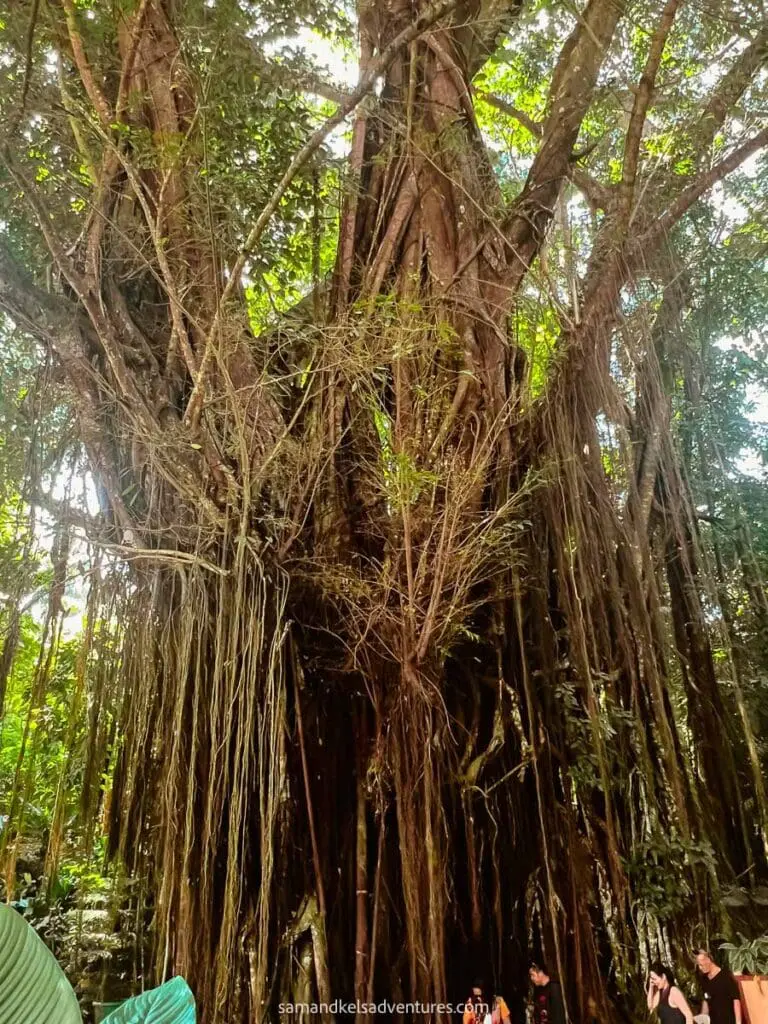
The Mystic Island: Legends & Folklore of Siquijor
Explore the fascinating myths, legends, and folklore that earned Siquijor its reputation as the Philippines' 'Island of Fire' and mystical healing center.
Siquijor's Seashell Museums and Marine Heritage: A Complete Visitor's Guide
Explore the fascinating world of Philippine marine shells at Siquijor's specialized museums. From rare spiral nautilus specimens to giant clam shells, discover the island's coastal heritage through expertly curated shell collections.