Siquijor Anting-Anting: The Island's Tradition of Protective Amulets and Talismans
Explore the deep-rooted tradition of anting-anting in Siquijor. From protective amulets to handcrafted talismans, discover how this practice shapes island culture and belief.
Walk through any town in Siquijor during the right season, and you may notice small objects hanging from doorframes, tucked inside wallets, or worn on strings around the necks of fishermen heading out before dawn. These are anting-anting, the protective amulets and talismans that have been part of Filipino folk belief for centuries and remain woven into daily life on this small Visayan island.
Siquijor’s reputation as the “Island of Sorcerers” or the “Mystic Island” is inseparable from the anting-anting tradition. While the island’s fame often gets reduced to simplistic stories about love potions and dark magic, the reality is far more nuanced. The anting-anting tradition is a complex spiritual practice rooted in pre-colonial Filipino animism, layered with centuries of Catholic influence, and sustained by communities that see no contradiction between attending Sunday mass and carrying a blessed amulet for protection.
What Is an Anting-Anting
The word anting-anting refers broadly to any object believed to possess supernatural protective power. In the Philippine context, this can range from a small piece of inscribed metal worn around the neck to an elaborate ritual object created by a specialist practitioner over the course of several days. The core belief is that certain objects, when properly prepared and blessed, can shield the wearer from harm, bring good fortune, or provide spiritual strength.
In Siquijor, anting-anting are most commonly associated with protection. Fishermen carry them when heading out to sea. Farmers tuck them into clothing during the planting season. Travelers wear them for safety on the road. The specific form an anting-anting takes varies widely depending on its intended purpose and the practitioner who creates it.
Common Types of Anting-Anting in Siquijor
The most prevalent forms found on the island include:
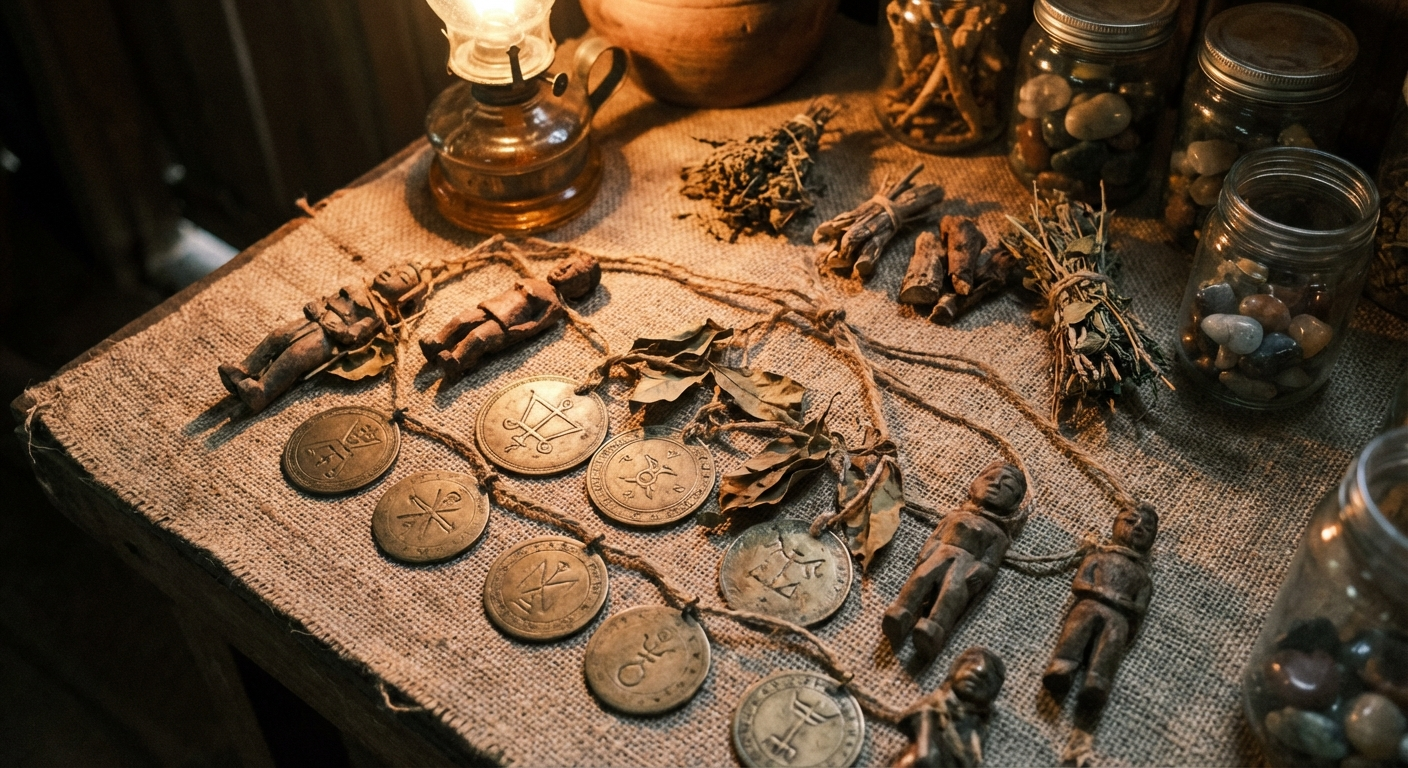
Medallions and Inscribed Metal Pieces. Small circular or rectangular pieces of brass, copper, or tin inscribed with Latin prayers, symbols, or oraciones (prayer-formulas). These are the most recognizable anting-anting and are often worn on a cord around the neck or kept in a pocket.
Botanical Amulets. Small pouches containing specific combinations of dried herbs, roots, bark, or seeds. The ingredients are chosen based on their attributed properties, and the combination is often unique to the practitioner who assembles them. These overlap with the herbolaryo (herbalist) traditions that Siquijor is also known for.
Inscribed Cloth or Paper. Prayers or protective formulas written on small pieces of cloth or paper, folded precisely, and carried on the person. The text may be in Latin, Old Spanish, Cebuano, or a mixture of languages that reflects the layered history of spiritual practice in the Philippines.
Natural Objects. Certain stones, pieces of coral, animal teeth, or shells are considered to have inherent protective properties. When identified and blessed by a knowledgeable practitioner, these become anting-anting without additional inscription or preparation.
Tattoo Anting-Anting. In some traditions, the protection is not carried but inscribed directly on the body. Certain tattoo patterns, particularly those incorporating prayer text or symbolic designs, are considered permanent anting-anting. This practice connects to the broader tradition of Filipino tribal tattooing that predates Spanish colonization.
The Practitioners: Who Makes Anting-Anting
In Siquijor, the creation of anting-anting is closely associated with the mananambal, the traditional healers who are the island’s most recognized spiritual practitioners. However, not all mananambal make anting-anting, and not all anting-anting makers are mananambal. The traditions overlap but are not identical.
The practitioners who specialize in anting-anting creation are sometimes called mangaanting or, more commonly, simply referred to by their general title of mananambal or herbolaryo. Many of these practitioners learned their craft through family lineage, with knowledge passed from parent to child or from elder to chosen apprentice over years of training.
The process of creating an anting-anting is not simply a matter of craftsmanship. It involves ritual preparation that may include fasting, prayer, the gathering of specific materials during particular lunar phases or calendar dates, and the recitation of oraciones that activate the object’s protective properties. The practitioner’s own spiritual preparation is considered as important as the physical construction of the amulet.
The Role of Oraciones
Central to the anting-anting tradition is the concept of oraciones, prayer-formulas that are believed to carry spiritual power. These prayers are typically recited during the creation of an anting-anting and may also be spoken by the wearer as part of activating or maintaining the amulet’s protective properties.
The oraciones used in Siquijor are a remarkable linguistic artifact. Many contain fragments of Latin Catholic prayers mixed with Visayan invocations, Spanish-era devotional language, and words or phrases whose origins are no longer clearly traceable. This blending reflects the historical process by which pre-colonial animist beliefs absorbed and reinterpreted the Catholic framework introduced by Spanish missionaries beginning in the 16th century.
Practitioners guard their oraciones carefully. These prayers are considered powerful precisely because they are not widely known, and sharing them carelessly is believed to diminish their effectiveness. This secrecy is not about exclusion but about maintaining the integrity of a spiritual tradition that depends on focused intention and proper transmission.
Holy Week: The Peak of Anting-Anting Activity
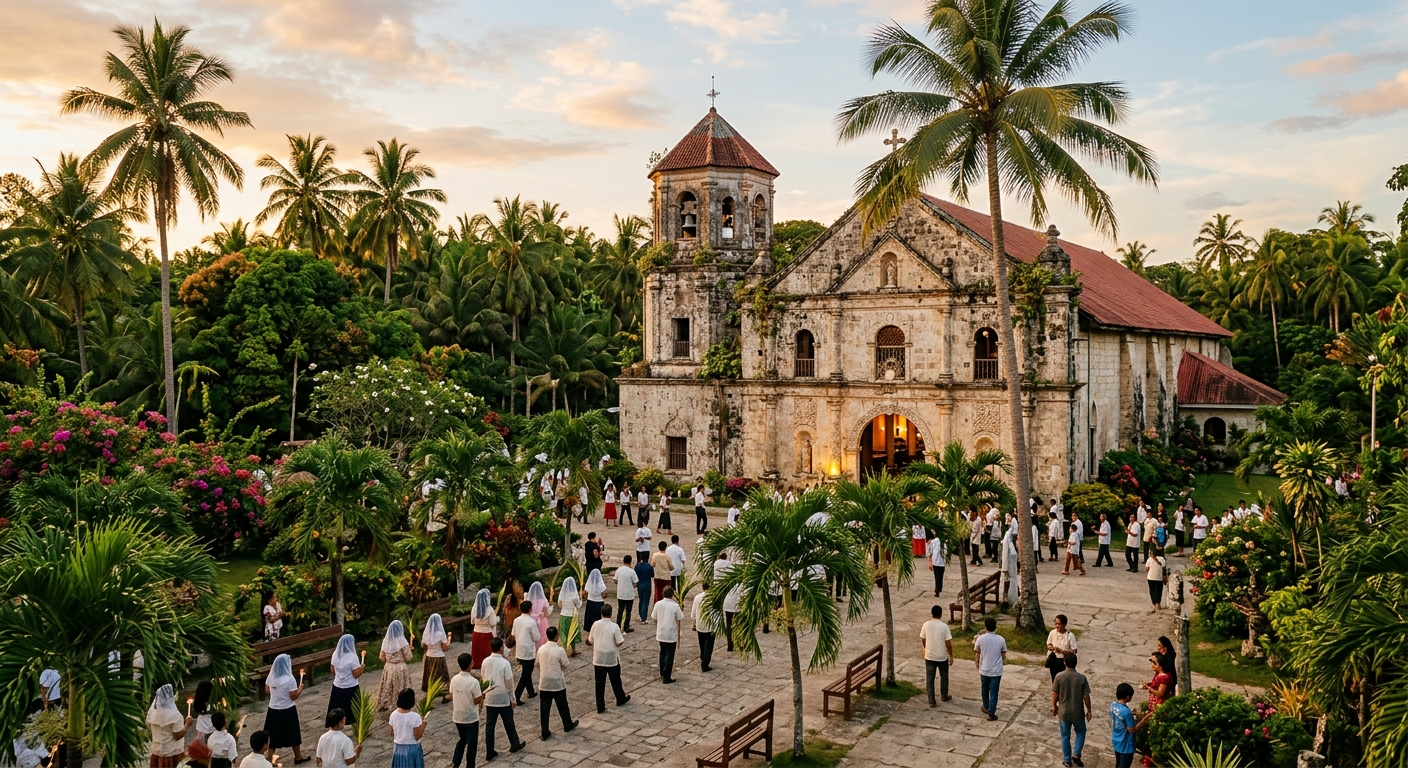
The most significant period for anting-anting practice in Siquijor is Holy Week, particularly the days from Holy Wednesday through Black Saturday. During this time, practitioners gather to prepare new amulets, renew existing ones, and perform rituals that are believed to be especially potent during this liturgically charged period.
The connection between Holy Week and anting-anting creation is rooted in the belief that the boundary between the physical and spiritual worlds is thinner during the days commemorating Christ’s death and resurrection. This concept parallels similar beliefs found across Catholic folk traditions worldwide, where Holy Week is associated with heightened spiritual activity and the efficacy of blessings and protections.
In Siquijor, the Holy Week gatherings of mananambal and anting-anting practitioners attract both genuine seekers and curious visitors. The events centered around the Balete Tree and specific healing sites in the municipalities of San Antonio and Lazi have become well-known, drawing media attention and a growing number of tourists interested in witnessing these practices.
The Balete Tree Connection
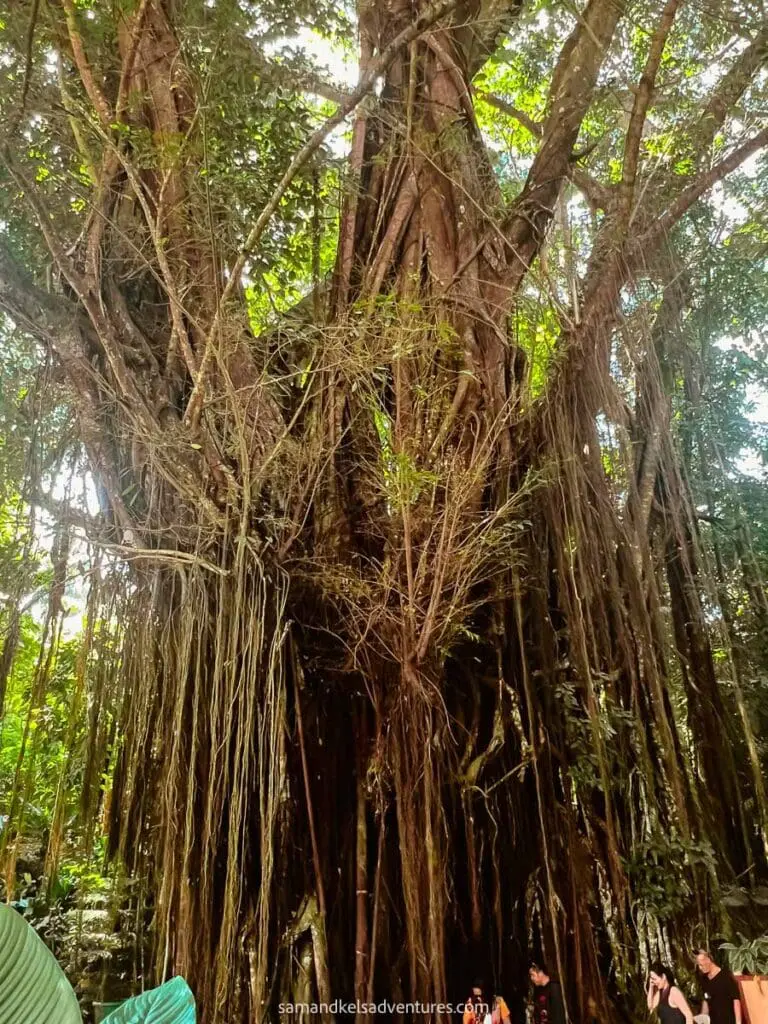
The Old Enchanted Balete Tree in Lazi has become a focal point for anting-anting activity, particularly during Holy Week. This massive centuries-old tree, with its dramatic aerial roots creating a cave-like structure, is considered a spiritually significant site by practitioners and locals.
During Holy Week, mananambal gather near the tree to perform rituals, prepare amulets, and offer healing services. The site takes on a market-like atmosphere, with practitioners setting up along the road and offering various spiritual services to visitors. While some of this activity caters to tourist curiosity, genuine practitioners continue their work alongside the more commercial operations.
The Balete Tree’s association with anting-anting and healing practices predates tourism. Large old-growth trees have long been considered spiritually significant in Filipino animist belief, regarded as dwelling places of nature spirits and points where the physical and spiritual worlds intersect. The specific Balete Tree in Lazi simply became the most visible example of this broader cultural pattern.
Anting-Anting and Catholicism
One of the most interesting aspects of the anting-anting tradition in Siquijor is its relationship with institutional Catholicism. The Philippines is the most Catholic country in Asia, and Siquijor is no exception. Churches are central to community life in every municipality, and religious observances are taken seriously by the population.
Yet the practice of carrying anting-anting exists comfortably alongside Catholic devotion for most Siquijodnons. This coexistence is not seen as contradictory by practitioners or their communities. Many anting-anting incorporate explicitly Catholic elements: prayers to saints, invocations of the Holy Trinity, images of the Virgin Mary, or fragments of Latin liturgical text. The protective power of the anting-anting is understood within a framework that includes Catholic cosmology rather than opposing it.
The official Church position on anting-anting has varied over the centuries, ranging from outright condemnation during the Spanish colonial period to a more nuanced contemporary approach that distinguishes between folk devotional practices and actual sorcery. In practice, most parish priests in Siquijor coexist peacefully with the anting-anting tradition, recognizing its deep cultural roots and its role in community spiritual life.
How Visitors Can Respectfully Engage
For travelers interested in learning about the anting-anting tradition, Siquijor offers several ways to engage respectfully:
Visit during Holy Week. The healing festivals and practitioner gatherings that take place during Holy Week provide the most accessible window into anting-anting culture. Observe with respect, ask permission before photographing, and approach practitioners with genuine curiosity rather than sensationalism.
Talk to locals. Many Siquijodnons have personal connections to the anting-anting tradition through family members, neighbors, or their own practice. Casual conversations can reveal fascinating perspectives, but let people share at their own pace rather than pressing for information about what is considered private spiritual practice.
Visit the Siquijor Heritage Museum. The small museum in Siquijor town includes displays about local healing traditions and spiritual practices. This provides useful historical context before encountering these traditions in living practice.
Purchase with understanding. If you choose to buy an anting-anting from a practitioner or market vendor, understand what you are receiving. A mass-produced souvenir pendant is different from an amulet that has been ritually prepared by a practitioner. Both have their place, but knowing the difference shows respect for the tradition.
What to Avoid
Approaching the anting-anting tradition with mockery, fear, or sensationalism causes real harm. Siquijor has long struggled with its reputation as an “island of witchcraft,” a characterization that reduces a complex spiritual tradition to a Halloween caricature. Many residents feel ambivalent about this reputation because while it attracts tourists, it also perpetuates misunderstandings about their culture and beliefs.
Do not secretly record rituals or ceremonies. Do not pressure practitioners to reveal their oraciones or methods. Do not treat anting-anting as exotic curiosities to be collected and displayed without understanding. These are living spiritual practices with real meaning to the people who maintain them.
The Tradition Today
The anting-anting tradition in Siquijor faces the same pressures affecting indigenous spiritual practices throughout Southeast Asia. Younger generations, influenced by formal education, social media, and economic migration, sometimes view these practices as outdated superstition. The number of active practitioners has declined compared to previous generations, and the deep knowledge required to create genuine anting-anting is not being transmitted as broadly as it once was.
At the same time, there are countervailing forces. Growing interest in indigenous Filipino culture, the wellness tourism movement, and a broader global curiosity about traditional spiritual practices have created new audiences for Siquijor’s healers and their traditions. Some young Siquijodnons are reconnecting with these practices, seeing them not as superstition but as cultural heritage worth preserving.
The tourism industry has complicated this picture. The commercialization of healing rituals and anting-anting creation during Holy Week has created economic incentives that support practitioners but also risk transforming sacred practices into tourist performances. Navigating this tension is an ongoing challenge for the community.
What remains clear is that the anting-anting tradition is not merely a historical curiosity or a tourist attraction. It is a living expression of how one small island community has maintained spiritual practices across centuries of colonial imposition, religious transformation, and now, the pressures of global tourism. The small amulet tucked inside a fisherman’s pocket as he heads out to sea at four in the morning carries the weight of that entire history.
Planning Your Visit
If exploring Siquijor’s anting-anting tradition is part of your travel interest, timing matters. Holy Week provides the most concentrated opportunity to observe practitioners at work, but the tradition is present year-round in less visible ways.
The municipalities of San Antonio and Lazi are historically most associated with healing and anting-anting practices. The Balete Tree area in Lazi serves as the most accessible point of contact, particularly during peak seasons.
Approach with openness, respect, and genuine curiosity. The people who maintain these traditions are not performing for cameras. They are practicing a way of understanding the world that has sustained their families and communities for generations. Your willingness to engage on those terms determines the quality of what you will learn.
Related Culture & History
The Mystic Island: Legends & Folklore of Siquijor
Explore the fascinating myths, legends, and folklore that earned Siquijor its reputation as the Philippines' 'Island of Fire' and mystical healing center.
Holy Week in Siquijor 2026: Easter Traditions, Healing Rituals and Travel Tips
Plan your Holy Week visit to Siquijor Island with this guide to Easter traditions, healing festivals, church schedules, and practical travel tips for April 2026.

Siquijor's Ancient Balete Trees: Where Mystic Heritage Meets Living Traditions
Centuries-old balete trees with massive root systems and sacred fish ponds are central to Siquijor's folklore and healing traditions. This guide explores the history, legend, and visitor experience.