Holy Week in Siquijor 2026: Easter Traditions, Healing Rituals and Travel Tips
Plan your Holy Week visit to Siquijor Island with this guide to Easter traditions, healing festivals, church schedules, and practical travel tips for April 2026.
Why Siquijor During Holy Week
Holy Week in the Philippines is unlike anywhere else in the world. The entire country slows to a reverent pause from Palm Sunday through Easter Sunday, with businesses closing, families gathering, and centuries-old religious traditions unfolding in every province. But on Siquijor, the observance carries an additional dimension that exists nowhere else in the archipelago.
This is the island where Catholic faith and pre-colonial healing traditions have coexisted for centuries, and Holy Week is the one time of year when the two come together most visibly. The same week that sees solemn processions through municipal streets also draws healers to the forests and mountains for their most important annual gathering. For visitors who time their trip to coincide with Easter 2026, the result is a cultural experience that is simultaneously deeply Filipino and uniquely Siquijodnon.
Holy Week 2026 falls on March 29 (Palm Sunday) through April 5 (Easter Sunday), with the official holidays of Maundy Thursday on April 2 and Good Friday on April 3.
The Church Calendar: What Happens and When
Palm Sunday (March 29)
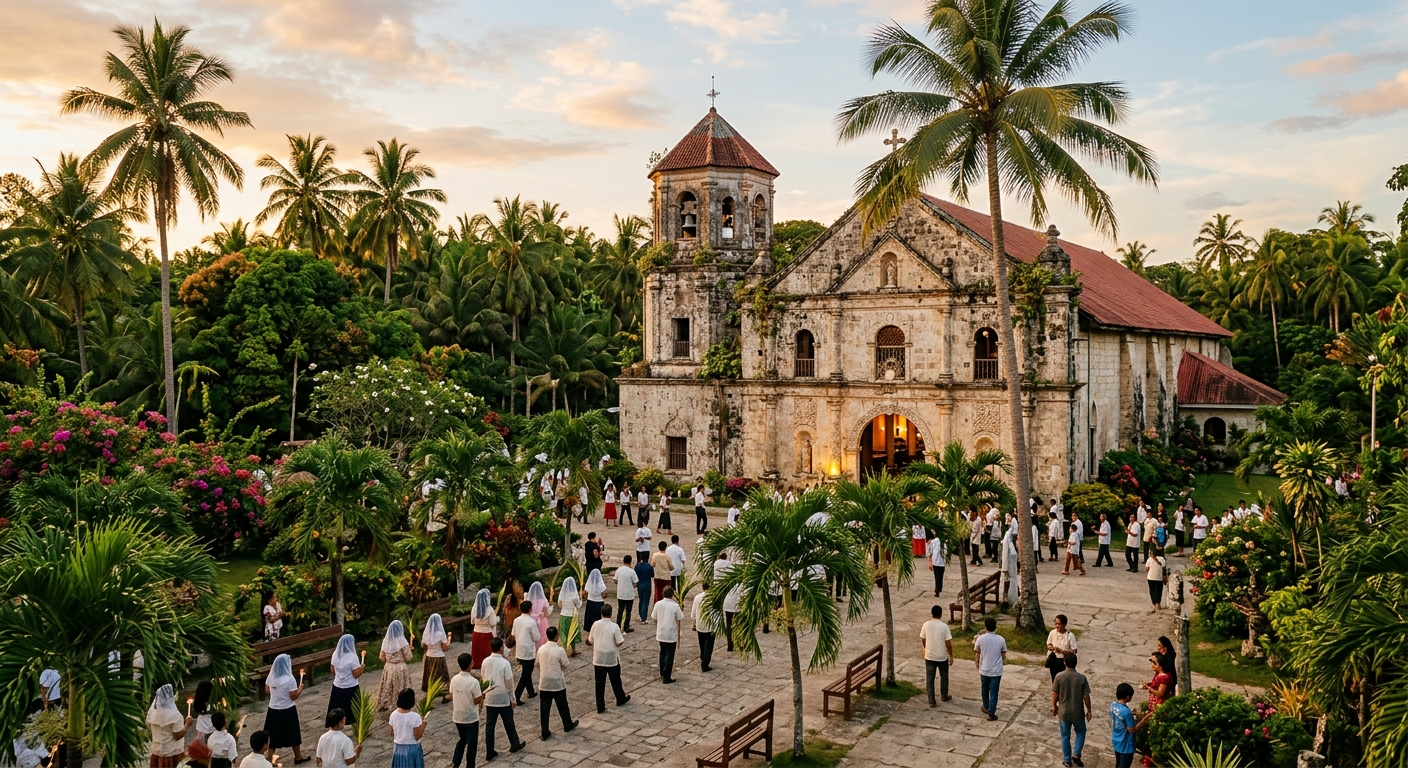
The week begins with Palm Sunday masses at all six of Siquijor’s municipal churches. The most atmospheric services take place at Lazi Church (San Isidro Labrador), the largest and oldest stone church on the island, and at Siquijor Church (San Francisco de Assisi) in the capital town. Both churches date to the Spanish colonial period and their weathered coral stone walls provide a setting that connects the present observance directly to centuries of tradition.
Parishioners arrive carrying palm fronds or coconut leaves woven into crosses and other shapes. The blessing of the palms happens before the main mass, typically between 7:00 and 8:00 AM. After the service, the blessed palms are taken home and placed above doorways or near windows, where they are believed to provide protection for the household throughout the coming year.
Monday through Wednesday of Holy Week
The early days of the week are relatively quiet on the island. Daily masses continue at the parish churches, and many families begin their preparations for the solemn days ahead. This is actually an excellent time for visitors to explore the island, as the calm before the holiday weekend means fewer domestic tourists have arrived yet.
Some churches hold evening prayer services or novenas during these days. The Lazi Church evening services, typically beginning at 6:00 PM, are particularly moving in the candlelit interior of the 19th-century building.
Maundy Thursday (April 2)
Maundy Thursday marks the beginning of the Triduum, the three most sacred days of the Christian calendar, and the shift in atmosphere on Siquijor is immediate. The Visita Iglesia tradition brings families to visit multiple churches, and on an island with six municipal parishes, completing the circuit is entirely feasible in a single day.
The morning mass commemorates the Last Supper and includes the washing of feet ceremony, where the parish priest washes the feet of twelve parishioners representing the apostles. At Lazi Church and Siquijor Church, this ceremony draws large crowds and is performed with particular solemnity.
By afternoon, the island enters a period of quiet. Church bells stop ringing and are replaced by wooden clappers called matracas. Music and loud entertainment cease. Many restaurants and businesses close for the remainder of the week, reopening only on Easter Sunday or Monday. Visitors should stock up on supplies and confirm restaurant availability before Thursday afternoon.
The evening brings the Senakulo, a dramatic reenactment of the Passion of Christ performed by community members in the church grounds or town plazas. These are not polished theatrical productions but earnest, community-driven performances that can be deeply affecting regardless of the viewer’s religious beliefs.
Good Friday (April 3)
Good Friday is the most solemn day on the island. Siquijor becomes exceptionally quiet. Traditional belief holds that unnecessary activity, noise, and even excessive cooking should be avoided out of respect for the suffering of Christ. Many Siquijodnons observe a day of fasting and abstinence, eating only one full meal and avoiding meat entirely.
The morning procession is the central public event. In each municipality, a procession of religious statues and images called carrozas moves through the streets, carried by devotees. The procession in Siquijor town is typically the largest, winding through the old streets near the church and port area, but smaller processions in Lazi, San Juan, Maria, Enrique Villanueva, and Larena each have their own character.
The Seven Last Words service, usually held between noon and 3:00 PM at the parish churches, is a contemplative ceremony reflecting on the final statements of Christ. The afternoon Procession of the Santo Entierro (Holy Burial) follows, featuring a statue of the dead Christ in a glass-sided coffin carried through the streets.
Swimming and beach activities are culturally sensitive on Good Friday. While there is no law prohibiting it, local tradition strongly discourages entering the water on this day. Most Siquijodnons will not swim on Good Friday, and visitors who respect this custom will find it appreciated.
Black Saturday (April 4)
Black Saturday carries a subdued atmosphere that gradually lightens as the day progresses. The morning remains quiet, with some families visiting the church for private prayer. By afternoon, a sense of anticipation builds as preparations for Easter Sunday begin.
The Easter Vigil mass on Saturday evening is the first celebration of the Resurrection and typically the most dramatic liturgical event of the year. At Lazi Church, the vigil begins outside the church in darkness, with the blessing of the new fire and the lighting of the Paschal candle, which is then carried into the darkened church as the congregation follows with their own candles. The progression from total darkness to a church filled with candlelight is a genuinely powerful experience.
Easter Sunday (April 5)
Dawn on Easter Sunday brings the Salubong, a dramatic reenactment of the meeting between the Risen Christ and the Virgin Mary. Two separate processions, one carrying the image of Christ and one carrying the image of Mary wearing a black mourning veil, converge at a meeting point, usually in the town plaza. At the moment of meeting, the veil is lifted from the Virgin Mary’s face by an angel figure, usually a young girl lowered on a platform, while the crowd erupts in celebration.
The Salubong in Siquijor town typically begins between 4:00 and 5:00 AM, meaning attendees need to be in position before dawn. Despite the early hour, the turnout is substantial. The emotional release after the restraint of the previous days is palpable.
Regular Easter Sunday masses follow at the normal schedules, and the remainder of the day is a celebration. Families gather for large meals, businesses reopen, and the island returns to its normal rhythm. Many Filipino tourists extend their stay through the weekend, making Easter Sunday and the following Monday among the busiest days of the year.
The Healing Dimension: What Makes Siquijor Different
The Healers’ Gathering
The aspect of Holy Week on Siquijor that draws the most curiosity and the most misunderstanding is the traditional gathering of mananambal (healers) on Mount Bandilaan. This gathering, which has occurred for generations, takes place during the days surrounding Good Friday when the spiritual energy is believed to be at its peak.
Healers from across the island and sometimes from neighboring provinces converge on the mountain to prepare their herbal medicines and ritual objects for the coming year. The preparations involve collecting specific plants, bark, roots, and other materials from the forest, combining them according to traditional formulas, and conducting prayers and rituals over the preparations.
This is not a festival or a performance. It is a serious practice that the healers conduct for practical purposes. The medicines prepared during Holy Week are believed to be most potent because of the spiritual conditions of the period, and they will be used throughout the year to treat patients.
Visiting the Gathering
The question visitors most frequently ask is whether they can observe the healers’ gathering. The answer is complicated. Some aspects of the gathering are relatively open, particularly the market-like scene where prepared medicines, amulets, and herbal products are sold near the Bandilaan summit. This area welcomes visitors and offers an opportunity to speak with practitioners and learn about their traditions.
The actual preparation rituals, however, are private. Approaching a healer conducting a ritual without invitation is inappropriate. Photography of rituals without explicit permission is disrespectful. The best approach is to visit the Bandilaan area with a local guide who can introduce you to practitioners who are willing to interact with visitors and explain which areas are open and which should be left undisturbed.
The Provincial Government of Siquijor has in recent years organized more formal cultural presentations around the healing traditions during Holy Week, which offer a structured way to learn about the practices without intruding on active ceremonies.
Understanding the Tradition
Siquijor’s healing tradition is often sensationalized in media coverage as “black magic” or “witchcraft.” This characterization is inaccurate and offensive to practitioners. The mananambal are herbalists and spiritual healers whose knowledge has been passed down through generations. Their practice combines extensive botanical knowledge with prayer and ritual elements that draw from both pre-colonial spiritual beliefs and Catholic faith.
The medicines they prepare are primarily herbal. Bark, leaves, roots, and oils from specific trees and plants are combined according to formulas that the healers learn through long apprenticeships. Some preparations are applied externally as poultices or massage oils. Others are consumed as teas or tinctures. The healers also prepare amulets (anting-anting) and ritual items that are believed to provide protection or bring good fortune.
Approaching these traditions with genuine curiosity and respect opens doors. Approaching them with sensationalism or mockery closes them immediately.
Practical Planning for Holy Week 2026
Accommodation
Book early. Holy Week is one of the busiest periods on Siquijor, second only to the weeks around Christmas and New Year. Domestic tourists from Cebu, Dumaguete, and Manila arrive in large numbers starting the Wednesday before Holy Week. By Maundy Thursday, most accommodations in San Juan and Siquijor town are fully booked.
Booking at least four to six weeks in advance is strongly recommended for Holy Week stays. Properties in Maria and Enrique Villanueva tend to have more availability due to their distance from the main tourist areas, but this also means less access to restaurants and services during the days when many businesses close.
Budget accommodations fill up first. If you are traveling on a tight budget, booking two months ahead is not excessive.
Food and Supplies
This is critical: many restaurants, bakeries, and even sari-sari stores close from Maundy Thursday afternoon through Saturday. Some reopen for Easter Sunday, but not all. The public market in Siquijor town and the San Juan market are the most reliable sources for supplies, but even they reduce hours during the Triduum.
Stock up on essentials by Wednesday evening. If your accommodation has a kitchen or refrigerator, buying groceries for Thursday through Saturday meals is a practical decision. Bottled water, bread, canned goods, and fruit from the market will see you through the quiet days comfortably.
Some resort restaurants remain open throughout Holy Week, particularly those catering primarily to foreign guests, but do not assume this without confirming directly with the property.
Transportation
Ferry schedules from Dumaguete and other ports typically run on modified schedules during Holy Week. Maundy Thursday sees heavy traffic as last-minute arrivals surge, and Black Saturday sees an early exodus of returning day-trippers. Easter Sunday ferries can sell out quickly in both directions.
Book ferry tickets in advance if possible, particularly for the return journey. The Dumaguete to Siquijor route via Montenegro and Aleson Shipping is the most popular and fills up fastest.
On the island, tricycle availability decreases during Good Friday as many drivers observe the day. If you have a rental motorcycle, this is the time to have it. If you rely on tricycles, arrange any necessary transportation the day before.
What to Pack
Church visits require modest clothing. Shoulders and knees should be covered for men and women when entering churches, particularly during Holy Week services. Lightweight long pants or a midi skirt and a shirt with sleeves are sufficient.
Sunscreen and a hat remain essential even during church-focused days, as processions happen outdoors and waiting times can be long in direct sun. An umbrella is useful for both sun protection and the occasional late-season shower.
A flashlight or phone light is useful for the Easter Vigil service, which begins in darkness. Comfortable walking shoes are needed for procession routes, which can cover several kilometers on uneven roads.
Respecting the Observance
The single most important piece of advice for visitors during Holy Week on Siquijor is to read the room. When the island is quiet, be quiet. When locals are in church, either join respectfully or give space. When the Salubong brings celebration at dawn, celebrate with them.
Loud music, excessive drinking, and boisterous beach behavior during Good Friday and Black Saturday morning will not get you arrested, but they will earn genuine disapproval from the community. Siquijor is a small island where visitors are noticed, and the respect you show during the most sacred days of the year directly shapes how the community perceives and receives all future visitors.
The reward for this respect is access to one of the most authentic cultural experiences remaining in the Philippines. Holy Week on Siquijor has not been packaged, sanitized, or staged for tourists. It is a living tradition that happens regardless of whether visitors are present, and being allowed to witness it is a privilege that the island extends with the quiet expectation that it will be honored.
Is Holy Week the Right Time for Your Visit?
If your primary interest in Siquijor is beaches, waterfalls, and outdoor adventure, Holy Week may not be the ideal timing. The cultural restrictions on Good Friday limit water activities, many businesses close, and the island is busier than usual with domestic visitors.
But if you are drawn to Siquijor for its cultural depth, its healing traditions, its historic churches, and its unique position in Philippine identity, then Holy Week offers something that no other time of year can match. The convergence of Catholic devotion and pre-colonial spiritual practice, played out across an island small enough to witness both in a single day, is genuinely one-of-a-kind.
The Siquijor you experience during Holy Week is the island at its most revealed. The faith, the traditions, the community bonds, and the quiet power of a place that has maintained its identity through centuries of change are all visible during these few days in a way they are not during the rest of the year. That visibility, more than any beach or waterfall, is what makes Siquijor worth visiting.
Related Culture & History
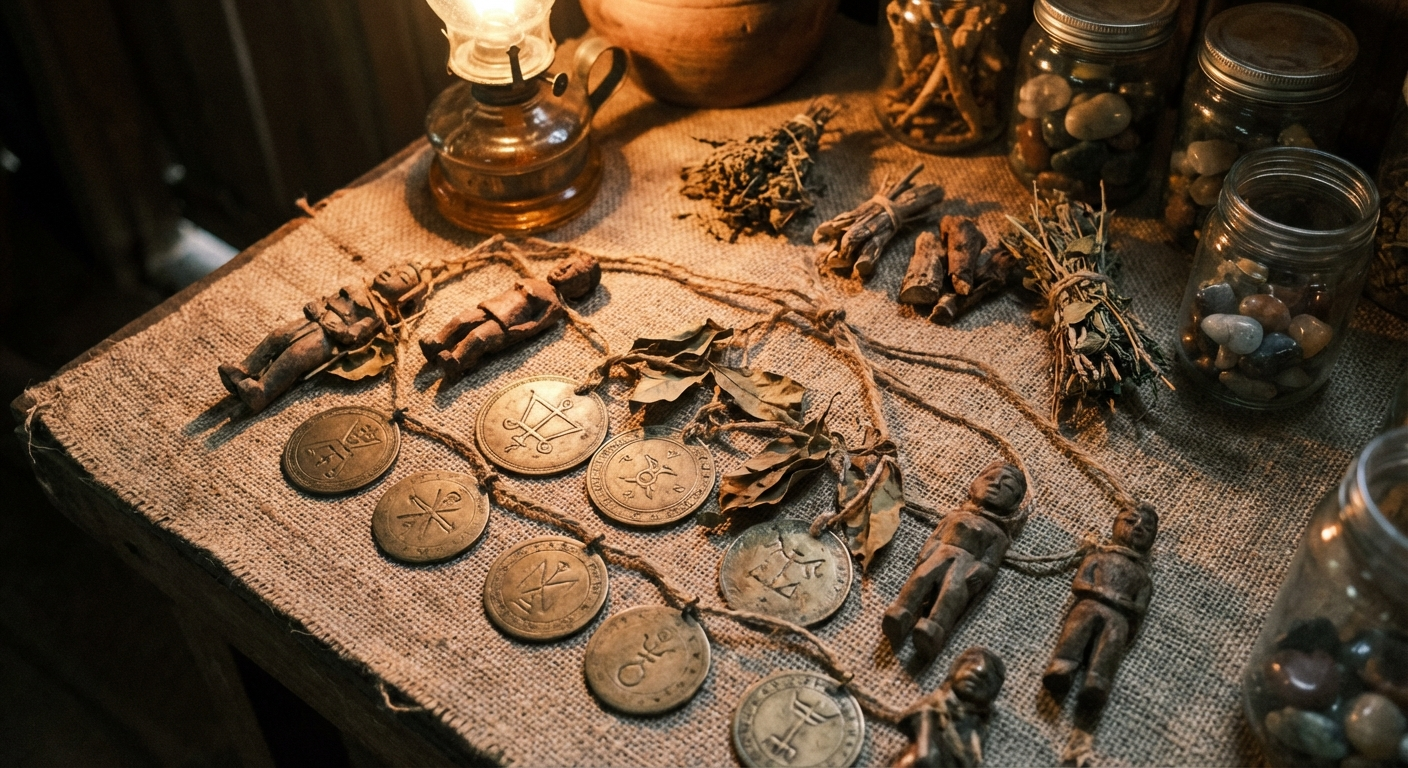
Siquijor Anting-Anting: The Island's Tradition of Protective Amulets and Talismans
Explore the deep-rooted tradition of anting-anting in Siquijor. From protective amulets to handcrafted talismans, discover how this practice shapes island culture and belief.
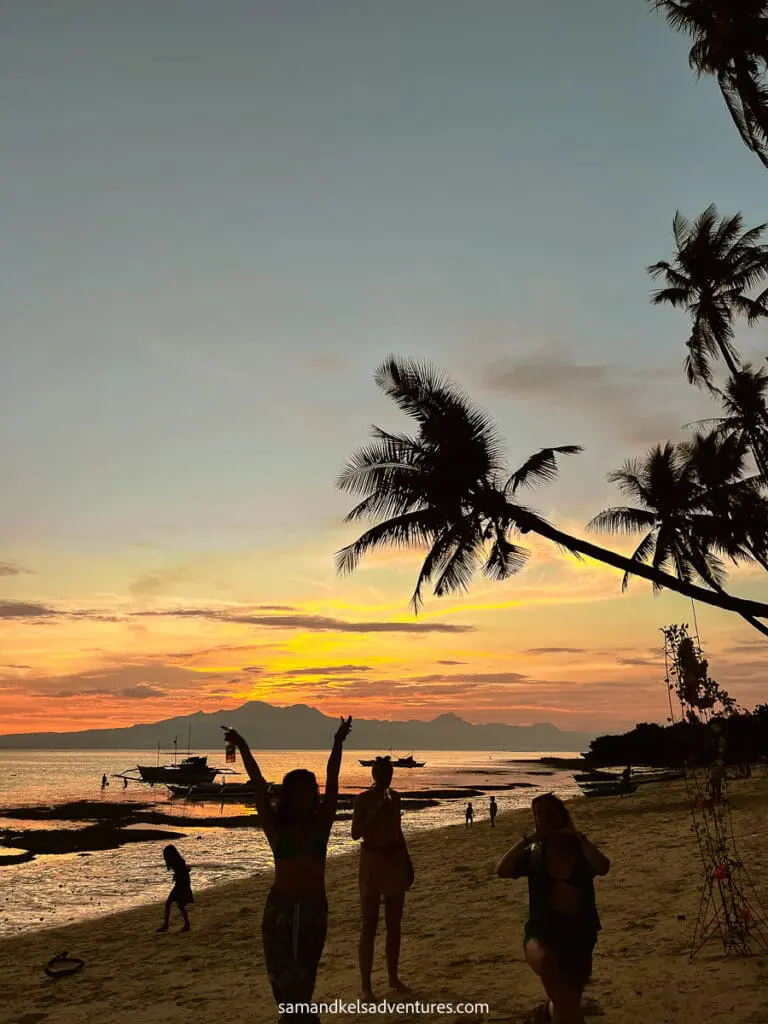
Siquijor Festivals & Local Culture Guide
Experience authentic Siquijor culture through its festivals, fiestas, and daily life. From Holy Week's Aninag to local celebrations, discover the island's vibrant traditions.
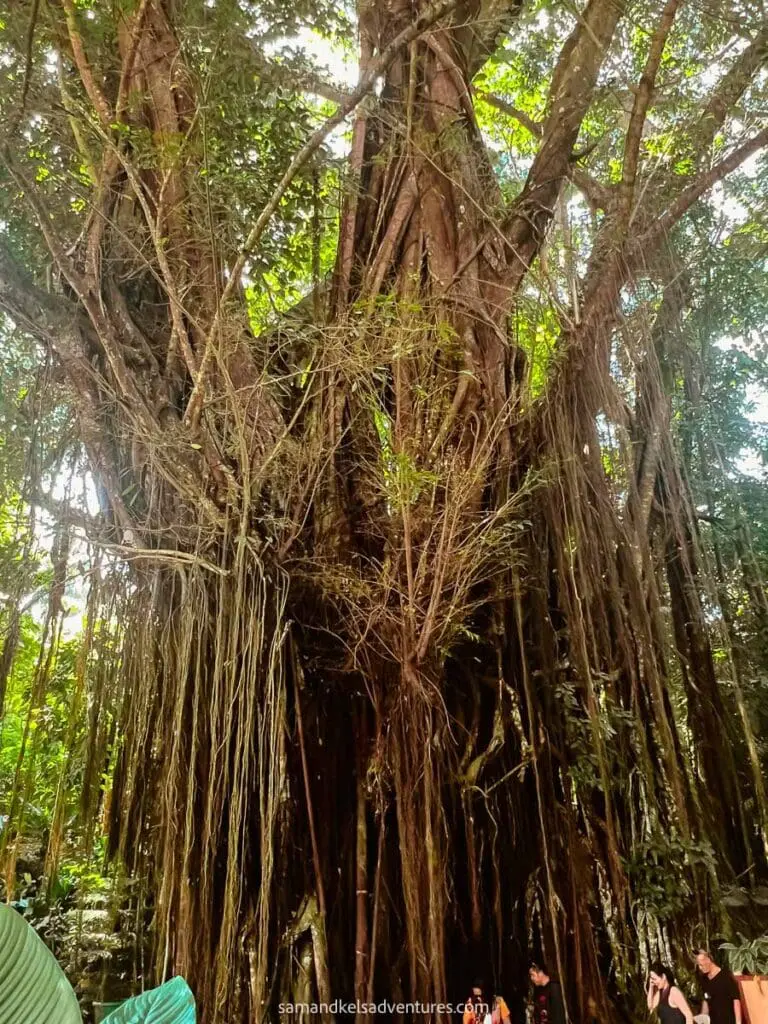
The Mystic Island: Legends & Folklore of Siquijor
Explore the fascinating myths, legends, and folklore that earned Siquijor its reputation as the Philippines' 'Island of Fire' and mystical healing center.