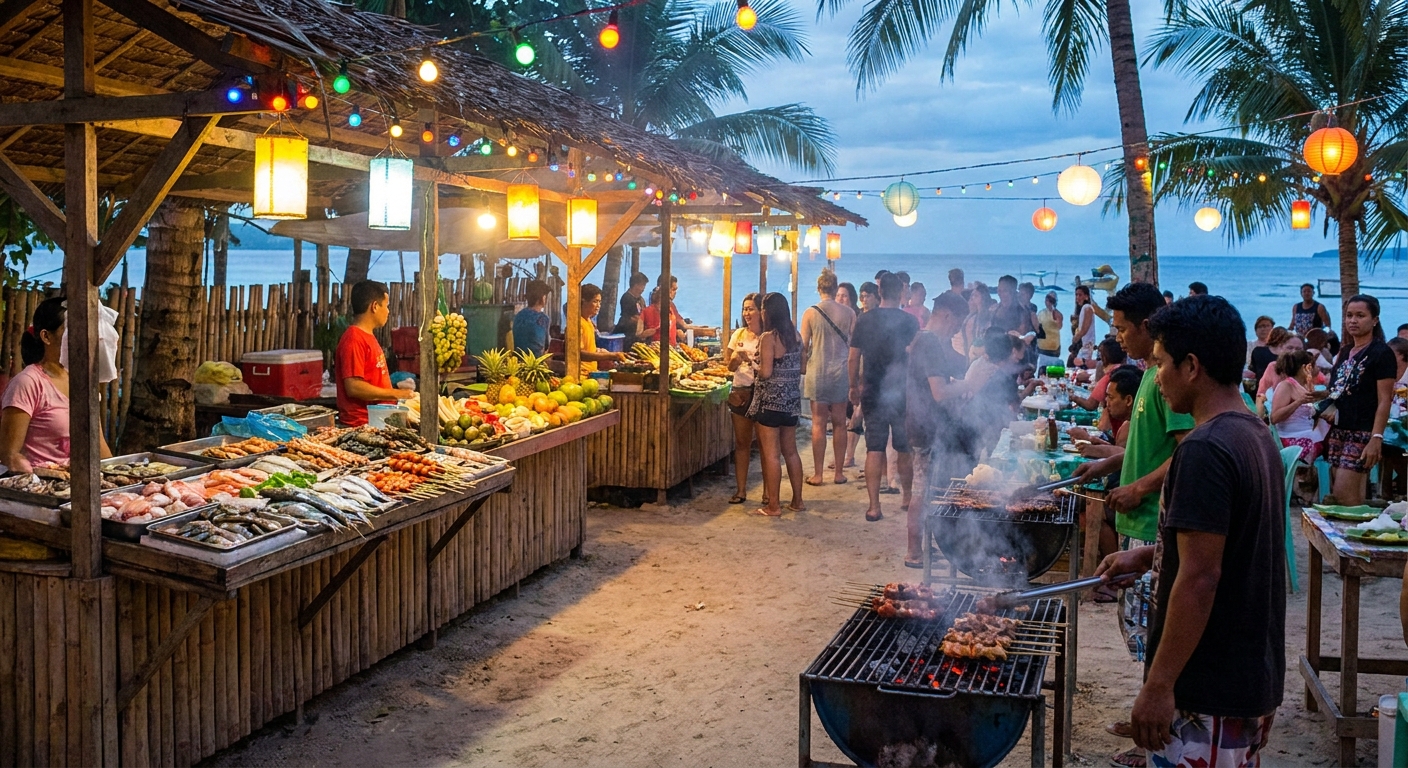
Siquijor Street Food and Night Market Guide: Where to Eat After Dark on the Mystic Island
Complete guide to Siquijor's best street food stalls, night markets, and evening dining experiences. Discover local delicacies, budget-friendly meals, hidden food spots, and practical tips for eating well on the island after sunset.
Siquijor reveals a different personality after the sun descends. The beach crowds thin, the heat moderates, and a network of food stalls, market vendors, and small restaurants emerges to feed the island’s evening population of locals and visitors. Understanding where and how to eat after dark separates the travelers who merely visit Siquijor from those who genuinely taste it.
The Night Market Culture in Siquijor
Night markets in Siquijor operate on varying schedules depending on the municipality, but the pattern follows a predictable rhythm across the island. The largest and most diverse market gathers in Siquijor town near the public market, typically beginning around four in the afternoon and running until nine or ten at night. Smaller markets serve Lazi, San Juan, and the other municipalities with their own timing and character.
These markets serve a dual purpose that benefits visitors. They provide affordable meal options for local residents who work during the day and shop for dinner in the evening. The same stalls that feed Filipino families also welcome travelers seeking authentic eating experiences at prices that bear no relation to restaurant billing. A meal costing two hundred pesos at a market stall would cost five times that amount in a tourist-oriented restaurant.
Essential Siquijor Street Foods to Find
Certain preparations define the Siquijor street food experience and deserve dedicated attention from any visitor willing to eat adventurously.
Grilled Seafood Stalls
The island’s location means fresh fish, squid, and shellfish arrive daily from local fishing boats. Market stalls near the public market in Siquijor town feature grilled tanigue, or mackerel, sold by the piece with a squeeze of calamansi and a side of garlic rice. The fish is split open, gutted, seasoned with salt and pepper, and cooked over charcoal until the skin blisters and the flesh becomes tender.
Galunggong, or round scad, appears at nearly every market stall and provides excellent value. At prices rarely exceeding sixty pesos per fish, it offers protein and flavor that hotel restaurants cannot match at any price. Ask vendors to split and season the fish before grilling for better penetration.
Squid grilled with soy sauce and garlic represents another essential experience. The vendors thread whole squid onto bamboo sticks and rotate them over coals until the flesh firms and takes on a light char. The combination of sweet soy glaze and smoky char produces a taste that no restaurant preparation quite captures.
Filipino Barbecue Varieties
Chicken and pork barbecue skewers constitute a staple of evening markets throughout the Philippines, and Siquijor maintains the tradition with local variations. The marinade typically combines soy sauce, calamansi juice, sugar, and garlic, creating a sweet-savory glaze that caramelizes on the grill. These skewers sell for twenty to thirty pesos each and make excellent walking food.
Inihaw na Liempo, or grilled pork belly, appears at the most popular stalls. The cuts are thicker than typical barbecue, giving the exterior time to char while the interior reaches proper tenderness. Dip options usually include a vinegar-based sauce or a spicy soy variant.
Isaw and Other Visceral Preparations
For the uninitiated, venturing into offal-based street foods requires courage but rewards curiosity with some of the most distinctly Filipino flavors available.
Isaw, grilled chicken intestine, represents one of the most common offerings. The intestines are cleaned thoroughly, marinated in a sweet sauce, threaded onto bamboo skewers, and grilled until the exterior achieves a slightly crispy char. The texture surprises first-time eaters, but the flavor demonstrates why this preparation has persisted across generations.
Betute, or stuffed frog, appeals to more adventurous palates. The frogs are cleaned, stuffed with garlic and onion, and fried until the skin becomes crispy. The meat is white and mild, comparable to chicken thigh in texture. This preparation reflects the island’s agricultural traditions and resourcefulness in finding protein sources.
Street Desserts and Snacks
Kwek-Kwek, breaded and fried quail eggs served with a vinegar dipping sauce, provides a portable protein option that vendors sell from baskets or makeshift stalls. The eggs are first hard-boiled, then breaded in orange-colored batter and deep-fried until the coating crisps. The contrast between the hot egg interior and the cool vinegar sauce creates a textural experience as much as a flavor one.
Banana-Q, grilled banana on a stick, offers sweetness for those seeking something less protein-focused. Saba bananas, the starchy cooking variety common in the Philippines, take well to charcoal grilling, which caramelizes their natural sugars and softens their texture. Some vendors offer them with cheese or peanut butter fillings.
Where to Find the Best Evening Food Spots
Siquijor Town Market
The public market area near the town center serves as the island’s largest food gathering point. Multiple vendors occupy designated areas, with grilled seafood stalls concentrated near the fish selling section and barbecue vendors positioned along the market’s perimeter.
Visit between five and seven in the evening for the fullest selection, as vendors begin setting up around four and peak around dinner time. By eight o’clock, some stalls begin selling out, so arriving earlier expands your options.
The market operates every day, though weekend evenings tend to draw larger crowds and more vendors. Weekday visits offer a less pressured atmosphere and potentially more personal interaction with vendors.
San Juan Public Market
The San Juan municipality maintains a smaller but well-organized market near the main road. Evening vendors here tend toward basic Filipino preparations, including grilled chicken, pork barbecue, and rice-based dishes. The advantage of this location is its proximity to beach resorts, making it convenient for travelers based in the San Juan area.
Look for vendors near the market’s edge where grill setups are most concentrated. The selection is more limited than Siquijor town, but the quality is consistent and the prices equally reasonable.
Mobile Vendors and Cart Stalls
Beyond formal market areas, mobile vendors operate throughout populated zones, particularly near churches and public transportation hubs. After evening masses at Lazi Church or San Juan, vendors set up temporary stalls serving binangkal, a deep-fried dough ring dusted with sugar, and puto, steamed rice cakes in various flavors.
These mobile vendors often disappear by nine in the evening, so timing matters for those seeking their offerings.
Practical Tips for Market Eating
Understanding a few conventions transforms market eating from intimidating to intuitive.
Payment and Ordering
Most vendors expect cash payment upon ordering, with no formal system for tracking orders. Point to what you want, confirm the price, hand over money, and receive your food. This directness extends to portion decisions; ask for one piece or two, specify rice preferences, and indicate any modifications you need.
English menus do not exist in most market contexts, but vendors generally understand basic English words for common items. Pointing, smiling, and the universal language of hunger communicate effectively when words fail.
Food Safety Considerations
Market food in Siquijor is generally safe when certain precautions apply. Choose stalls with high turnover, where ingredients spend minimum time sitting in the heat. Grilled items cooked to order represent lower risk than pre-cooked dishes left warming for extended periods.
Carry a small amount of cash in easily accessible pockets rather than large bills. This speeds transactions and avoids the awkwardness of paying with denominations too large for small purchases.
Bring hand sanitizer or wet wipes for cleaning hands before eating. Market environments do not offer洗手 facilities, so personal preparation is necessary.
Dietary Restrictions and Communication
Vegetarian options exist but require navigation. Most Filipino cooking relies on meat and fish as protein sources, making strict vegetarianism challenging in market contexts. grilled vegetables and fruit options provide alternatives, but communication about specific requirements helps vendors accommodate needs.
For seafood allergies, identifying the relevant Filipino terms helps: isda means fish, hipon means shrimp, pusit means squid, at talangka means crab. Point to the item and shake your head, or write down the specific items to avoid.
Beyond the Markets: Evening Restaurant Alternatives
Night markets serve the majority of evening food needs, but additional options exist for different occasions.
Grill Restaurants
Several small grill restaurants around the island specialize in cooked-to-order seafood and meat plates. These establishments operate more like formal restaurants than market stalls, with seats, menus, and table service. The trade-off involves higher prices, usually two to three times market rates, but also includes air conditioning, cleaner facilities, and more comfortable dining for longer meals.
The best of these establishments offer fresh fish priced by weight, allowing you to select your protein from a display and specify preparation style. This model ensures transparency about what you are eating and when it was harvested.
Beach Bar Kitchens
Beach bars operating in San Juan and other coastal areas often run kitchens that extend into the evening hours. These kitchens serve simplified menus of Filipino standards, including fried rice, grilled chicken, and sinigang, a sour soup preparation. The food quality varies considerably, so checking reviews or asking locally helps identify which bars maintain serious kitchen operations.
Small Carinderias
Carinderias, small eateries serving home-style Filipino dishes, operate during evening hours throughout Siquijor’s populated areas. These establishments offer三餐 combinations of rice, meat or fish, and vegetables at fixed prices, typically between eighty and one hundred fifty pesos for a complete meal.
The advantage of carinderias involves their reliability and consistency. If market stalls feel too adventurous, these small restaurants provide safe entry points to local dining with familiar service formats.
Seasonal Considerations for Evening Eating
The night market scene shifts with tourism patterns and local rhythms.
December through March brings the highest volume of visitors, which translates to more vendors, longer operating hours, and greater selection. The downside involves occasional overcrowding and the reality that some popular items sell out early.
The summer months of April and May see continued market activity despite reduced tourist numbers. Local families comprise a larger share of the customer base, creating opportunities for more authentic interactions with vendors who have fewer strangers to serve.
Rainy season from June through November adjusts market behavior somewhat, with some vendors reducing evening appearances during heavier rain periods. The markets themselves remain operational in covered areas, but the outdoor vendor density decreases. On the positive side, prices often drop during low season, and the atmosphere feels more locally focused.
Budget Estimates for Evening Meals
Market meals in Siquijor generally cost between fifty and three hundred pesos depending on what and how much you eat.
A substantial meal from a market stall includes grilled fish, rice, and a beverage for approximately one hundred fifty to two hundred pesos. Adding barbecue skewers or other items incrementally increases the total.
Street food snacks like isaw, kwek-kwek, or banana-Q cost fifteen to forty pesos each. A collection of snacks can constitute a light dinner for under one hundred pesos.
Restaurant meals run significantly higher, with most establishments charging three hundred to five hundred pesos for entrees and additional costs for rice, beverages, and desserts.
Making the Most of Evening Food Exploration
Approaching Siquijor’s night food scene with curiosity and flexibility yields the best results. Vendors appreciate visitors who engage respectfully with their offerings and who demonstrate willingness to try preparations outside their usual experience.
Bring small denominations of pesos, wear clothes that can handle food smells, and accept that some things will not appeal while others will surprise with their deliciousness. The point of market eating is not replicating restaurant experiences but tasting the island as its residents experience it daily.
By exploring multiple markets and trying various vendors, you develop preferences and connections that enrich subsequent visits. Returning to a stall where the vendor remembers you from previous days creates a different quality of travel experience than always eating anonymously.
Siquijor’s evening food culture offers an entry point to local life that photography, beaches, and waterfalls cannot match. Sit on a plastic stool, eat grilled fish with your hands, watch the market flow around you, and understand the island through the simple act of sharing meals with the people who call it home.
Related Travel Guides
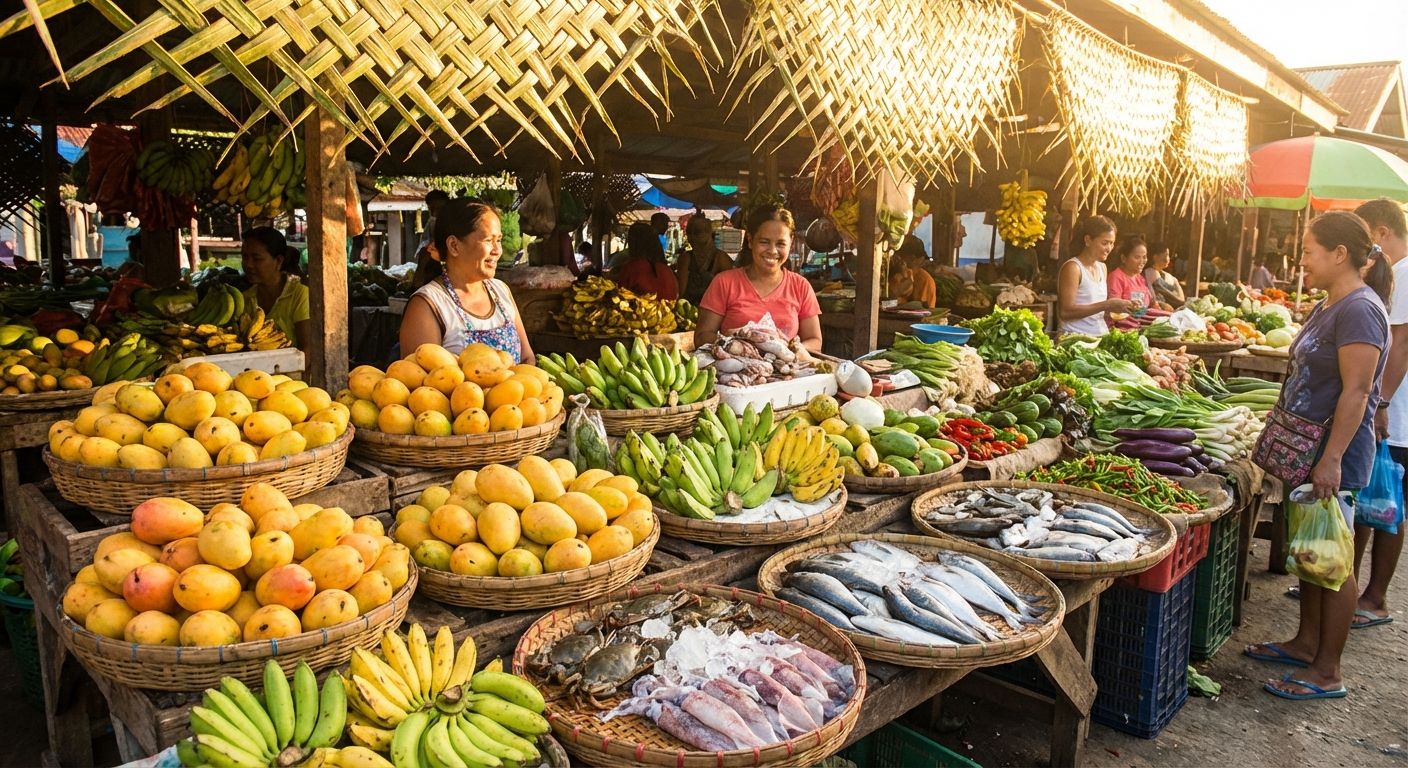
Siquijor Local Markets Guide: Where to Shop Like a Local
Discover Siquijor's best local markets, from Siquijor Town public market to rural barangay markets. Fresh seafood, tropical fruits, local crafts, and practical tips for market shopping on the island.

Siquijor on a Budget: A 7-Day Backpacker's Guide Under 3,000 Pesos
Stretch your peso with this Siquijor backpacker guide covering budget hostels, public jeepneys, local eateries, and free island activities — all on under 3,000 pesos.

The Shoulder Season Secret: Siquijor's Best Uncrowded Spots for Late April 2026
Beat the peak season crowds with this guide to Siquijor's most peaceful corners. Discover shaded swimming holes, breezy highland trails, and hidden coves where you can escape the late April heat.