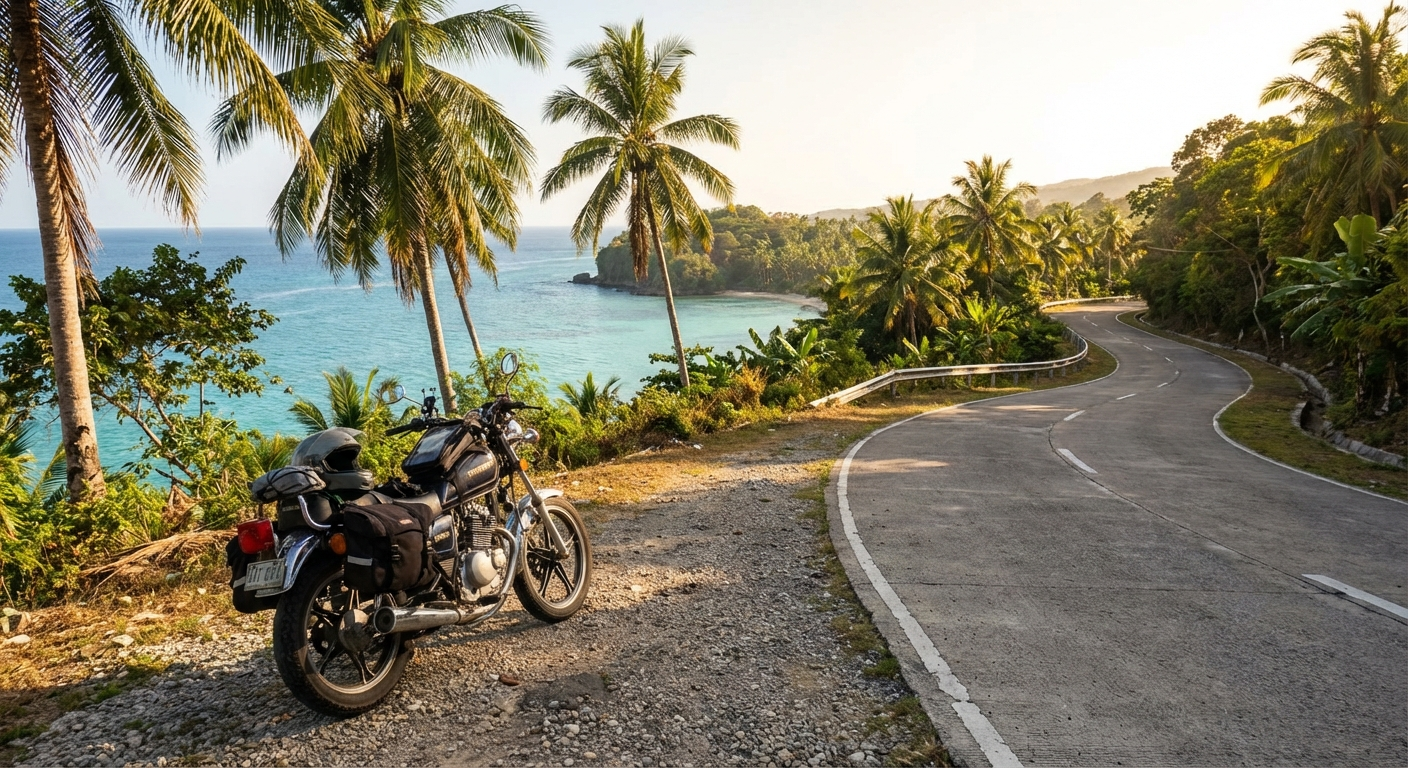
Siquijor Motorcycle Rental Guide: Tips, Prices & Safety for 2026
Everything you need to know about renting a motorcycle in Siquijor - rental prices, where to rent, driving tips, road conditions, fuel stations, and essential safety advice for exploring the island on two wheels.
Renting a motorcycle is the most popular and practical way to explore Siquijor Island. The entire coastal road stretches roughly 75 kilometers around the island, and a motorbike gives you the freedom to stop at every waterfall, beach, and viewpoint without depending on tricycle schedules or tour group itineraries. This guide covers everything you need to know about renting, riding, and staying safe on Siquijor’s roads in 2026.
Why a Motorcycle is the Best Way to See Siquijor
Siquijor is a small island, roughly 25 kilometers east to west and 18 kilometers north to south. The main circumferential road connects all six municipalities, and secondary roads branch off into the highland interior toward Mount Bandilaan, waterfalls, and farming communities. Public transportation exists in the form of tricycles and multicabs, but service is infrequent outside of town centers, especially in the afternoons and evenings.
A motorcycle solves this problem completely. You can circle the entire island in three to four hours of casual riding, stopping wherever you like. Want to catch sunrise at Kagusuan Beach and sunset at Paliton? Easy. Want to detour into the mountains to visit Cambugahay Falls and then continue to Lazi Church? No waiting, no negotiating fares, no worrying about return trips.
The cost is also compelling. A full day of motorcycle rental costs roughly the same as two or three tricycle rides, making it the most economical option for anyone planning to visit multiple locations.
Rental Prices in 2026
Motorcycle rental rates on Siquijor are standardized across most providers, though prices can vary slightly between high season and low season.
Scooters and Semi-Automatic (110cc to 125cc)
The most common rental bikes on the island are Honda Click, Yamaha Mio, and Honda Beat scooters. These are automatic transmission, easy to ride, and sufficient for both the coastal road and the steeper interior routes.
Daily rates typically range from 350 to 500 pesos per day. Longer rentals of three days or more often qualify for discounts, bringing the daily rate down to 300 to 400 pesos. Weekly rentals can go as low as 250 to 300 pesos per day depending on the provider and the season.
Manual Motorcycles (125cc to 155cc)
Manual transmission bikes such as the Honda TMX or Yamaha XTZ 125 are available from some rental shops. These are better suited for rough interior roads and steeper hills, though they require more riding experience.
Daily rates for manual bikes are similar to scooters, typically 400 to 500 pesos per day. The Yamaha XTZ and similar dual-sport models may command a slight premium of 500 to 600 pesos daily.
What is Included
Most rentals include a helmet (one per bike, sometimes two if you ask), and basic third-party insurance. Fuel is not included. You receive the bike with a certain fuel level and are expected to return it with the same amount, or you can negotiate to return it empty and pay accordingly.
Where to Rent
Motorcycle rental shops are concentrated in the three main arrival and tourist areas.
San Juan
The largest selection of rental bikes is in San Juan, particularly along the coastal road between Solangon Beach and Paliton Beach. Many resorts and guesthouses also arrange rentals through local partners, often at the same rate you would pay going directly.
Siquijor Town (Port Area)
Several rental shops operate near the Siquijor port, catering to visitors arriving by ferry from Dumaguete. Renting here is convenient if you want to start riding immediately after arrival. Prices are comparable to San Juan.
Larena
The Larena port area has a smaller number of rental providers. If you arrive via the Larena ferry from Dumaguete or Tagbilaran, you can usually find a rental within a short walk from the terminal. However, the selection may be more limited, especially during peak season.
Booking in Advance
During high season (December through May), it is wise to arrange your motorcycle rental in advance, particularly if you have a preference for a specific type of bike. Many guesthouses can coordinate this for you before arrival. Facebook is a common booking channel, with several Siquijor motorcycle rental groups where you can message providers directly.
Requirements
License
Philippine law requires a valid driver’s license with a motorcycle endorsement (restriction codes 1 or 2 on a Philippine license). For foreign visitors, an International Driving Permit with a motorcycle category is technically required, though enforcement on Siquijor varies. Some rental shops will rent to anyone who demonstrates basic riding competence, while others ask to see a license.
Regardless of local enforcement, riding without a proper license means your travel insurance will not cover any motorcycle-related incidents. If you plan to ride on Siquijor, ensure your license situation is sorted before you arrive.
Deposit and Documentation
Most rental providers require a deposit, which can take the form of cash (typically 1,000 to 3,000 pesos) or the temporary surrender of a government-issued ID or passport. Leaving your passport is generally not recommended, as it creates complications if the bike is damaged or the shop is difficult about returning it. A photocopy of your passport plus a cash deposit is a safer arrangement.
You should receive a simple rental agreement listing the daily rate, rental period, bike model and plate number, and any existing damage. If no written agreement is offered, ask for one or take a video of the bike’s condition before departing. Document any scratches, dents, or mechanical issues on camera with the shop staff present.
Road Conditions
The Coastal Road
The main circumferential road is paved and generally in good condition, having received improvements in recent years. The road is mostly two lanes with occasional narrow sections, particularly through towns. Surface quality is reliable for the most part, though watch for patches of loose gravel, especially on curves, and for potholes that appear after heavy rains.
Traffic on the coastal road is light compared to cities. Your main company will be other motorcycles, tricycles, occasional trucks, and the rare touring car. Livestock on the road is common, particularly dogs, chickens, goats, and occasionally carabao. Maintain a moderate speed and stay alert, especially when passing through residential areas.
Interior and Mountain Roads
Roads heading inland toward Mount Bandilaan, Cambugahay Falls, Cantabon Cave, and other highland attractions range from well-paved to rough concrete to unpaved. The road from the coast up to Mount Bandilaan National Park is paved but steep, with sharp switchbacks that require confident throttle control. A 110cc scooter can handle it, but you may need to lean forward on the steeper sections to keep the front wheel grounded if you are carrying a passenger.
Side roads to waterfalls and more remote areas can be unpaved, narrow, and slippery when wet. If you are not comfortable on loose surfaces, consider parking at the nearest paved point and walking the remaining distance.
Night Riding
Street lighting on Siquijor is minimal outside of town centers. The coastal road has very few lights between municipalities, and interior roads are essentially unlit. Night riding is manageable but requires extra caution. Keep your headlight on (this is also a legal requirement), reduce speed, and be especially watchful for pedestrians, unlit vehicles, and animals on the road.
Fuel Stations
Siquijor has a limited number of fuel stations, so plan accordingly.
The main stations are located in Siquijor Town, Larena, San Juan, Lazi, and Maria. Most are open from around 6:00 AM to 8:00 PM, with some closing earlier on Sundays. Fuel prices on the island are slightly higher than mainland Visayas due to transportation costs, typically 60 to 70 pesos per liter for gasoline as of early 2026.
Between stations, you will find sari-sari stores selling gasoline in recycled bottles along the road. These informal vendors charge a markup but are a lifeline if you are running low in a remote area. A full tank on most rental scooters (approximately 4 to 5 liters) is enough to circle the entire island with fuel to spare, so topping up once or twice per day is usually sufficient.
Safety Essentials
Helmets
Philippine law requires helmet use for both rider and passenger. The helmet provided with your rental is often a basic open-face model. If you value your safety, consider bringing your own helmet or purchasing a better one from a shop in Dumaguete before crossing to Siquijor. Full-face helmets are always preferable to open-face or half-shell models.
Protective Clothing
Most visitors ride in shorts and sandals, which is understandable in tropical heat but leaves you extremely vulnerable in even a minor fall. At minimum, wear closed shoes or sturdy sandals with ankle straps, and consider long pants for longer rides. A light long-sleeve shirt protects against both road rash and sunburn.
Speed
The coastal road invites easy cruising, and it is tempting to open the throttle on empty straight sections. Resist this impulse. The most common motorcycle accidents on Siquijor involve excessive speed combined with unexpected obstacles: a dog darting across the road, a patch of sand on a curve, or a truck emerging from a side road without warning. A comfortable cruising speed of 30 to 40 kilometers per hour gives you adequate reaction time and still allows you to enjoy the scenery.
Alcohol
It should go without saying, but do not ride after drinking. Siquijor’s nightlife is relaxed and often involves beachside rum or beer. If you plan to drink, leave the bike at your accommodation and hire a tricycle for the evening.
Rain
Sudden rain showers are possible year-round but are more frequent from June through October. When rain hits, road surfaces become slick, especially painted road markings, metal manhole covers, and sections with moss or algae. Reduce speed significantly, avoid sudden braking, and pull over if visibility drops. Many riders carry a compact rain poncho, which is a worthwhile investment.
Insurance and Liability
The basic insurance included with most rentals covers third-party liability only, meaning it pays for damage to other people or property if you are at fault. It typically does not cover damage to the rental bike itself or your own medical expenses.
Check whether your travel insurance covers motorcycle use. Many standard policies exclude motorcycles entirely, or only cover them if you hold a valid license. Some policies cover scooters under a certain engine displacement (usually 125cc or less). Read the fine print before you leave home.
If your travel insurance does not cover motorcycles, you assume full financial responsibility for any damage to the bike. This is another reason to document the bike’s condition thoroughly at pickup.
The 75-Kilometer Coastal Loop
The classic Siquijor motorcycle experience is the full island loop. Starting from San Juan and heading clockwise, a typical route passes through these highlights:
Paliton Beach provides an early stop for the island’s most photographed sunset spot, though it is equally beautiful in the morning light. Continuing south, the road passes through quiet barangays and coconut groves before reaching San Antonio, where a short detour leads to Cambugahay Falls.
From there, Lazi offers the historic church and convent, a good coffee stop, and a chance to stretch your legs. The road then climbs slightly as it passes through the southern coast, where views open up toward the sea with Mindanao visible on clear days.
The eastern side of the island is the least touristy section, passing through Maria before reaching Larena in the northeast. From Larena, the road back to Siquijor Town and then San Juan completes the loop.
Most riders complete the loop in four to six hours with stops, or two to three hours of continuous riding. Starting early in the morning is ideal, as light is best for photography, temperatures are cooler, and you beat the midday heat.
Tips from Experienced Riders
Start with a short test ride near your accommodation to get comfortable with the bike before heading onto busier roads. Every scooter handles slightly differently, and brakes in particular vary in responsiveness.
Carry a phone mount or keep your phone accessible for navigation. While the coastal road is essentially a single loop that is hard to get lost on, interior routes to waterfalls and viewpoints benefit from GPS guidance. Offline maps through Google Maps or Maps.me work well.
Bring a bungee cord or two if you plan to carry daypacks, shopping bags, or other items on the bike. Most rental scooters have limited under-seat storage.
Fill your tank in the morning before heading out. This is especially important if your route includes the southern or eastern coast, where fuel stations are spaced farther apart.
Carry a basic first aid kit with antiseptic, bandages, and pain relief. Minor scrapes from gravel or rough roads are the most common motorcycle-related injury on the island, and having supplies on hand saves you a trip back to town.
Finally, be courteous to other road users. Wave to fellow riders. Slow down when passing through villages. Pull over for larger vehicles on narrow sections. The roads of Siquijor are shared by everyone, from motorcycles and tricycles to schoolchildren walking home and farmers leading carabao, and the relaxed mutual respect among road users is part of what makes riding here so enjoyable.
Alternatives to Self-Drive
If you are not comfortable riding a motorcycle, you still have options for exploring the island independently.
Habal-habal (motorcycle taxi) drivers are available throughout the island and can take you to specific destinations for negotiated fares. A full-day hire with a driver typically costs 800 to 1,500 pesos depending on the route and number of stops.
Tricycles are available for shorter trips within and between nearby towns. Fares range from 20 to 150 pesos depending on distance.
Guided tours by van or multicab are offered by several operators and typically cover the main attractions in a single day for 2,000 to 3,500 pesos per group.
Bicycles are available for rent in San Juan from a few shops, typically at 200 to 300 pesos per day. The coastal road is relatively flat, though the heat and occasional hills make cycling the full loop a serious physical undertaking.
Each of these alternatives trades some flexibility for safety or comfort, and any of them will still show you a beautiful island. But for the complete Siquijor experience, the freedom and wind-in-your-hair joy of exploring by motorcycle is hard to beat.
Related Travel Guides
Siquijor Motorcycle Rental Guide: Tips for Riding Around the Island
Everything you need to know about renting and riding a motorcycle in Siquijor. Covers rental prices, road conditions, fuel stations, safety tips, and the best routes for a self-guided island tour.
Siquijor on a Budget: A 7-Day Backpacker's Guide Under 3,000 Pesos
Stretch your peso with this Siquijor backpacker guide covering budget hostels, public jeepneys, local eateries, and free island activities — all on under 3,000 pesos.
What to Pack for Siquijor: The Complete Packing Checklist for 2026
The definitive packing list for Siquijor Island. Covers clothing, gear, toiletries, electronics, and essentials for dry season, rainy season, and every type of traveler from backpackers to families.