Siquijor Tuba: The Island's Living Coconut Wine Tradition
Explore the centuries-old tradition of tuba (coconut wine) making in Siquijor. Learn about the mananggete collectors, the production process, and where to experience this unique island drink.
 Siquijor Culture Team
 Long before craft cocktail bars and imported wines reached the shores of the Philippines, island communities had already perfected their own alcoholic beverage: tuba, the naturally fermented sap of the coconut palm. In Siquijor, where coconut palms line nearly every stretch of coastline and interior road, tuba production remains a living tradition that connects the present to centuries of island history.
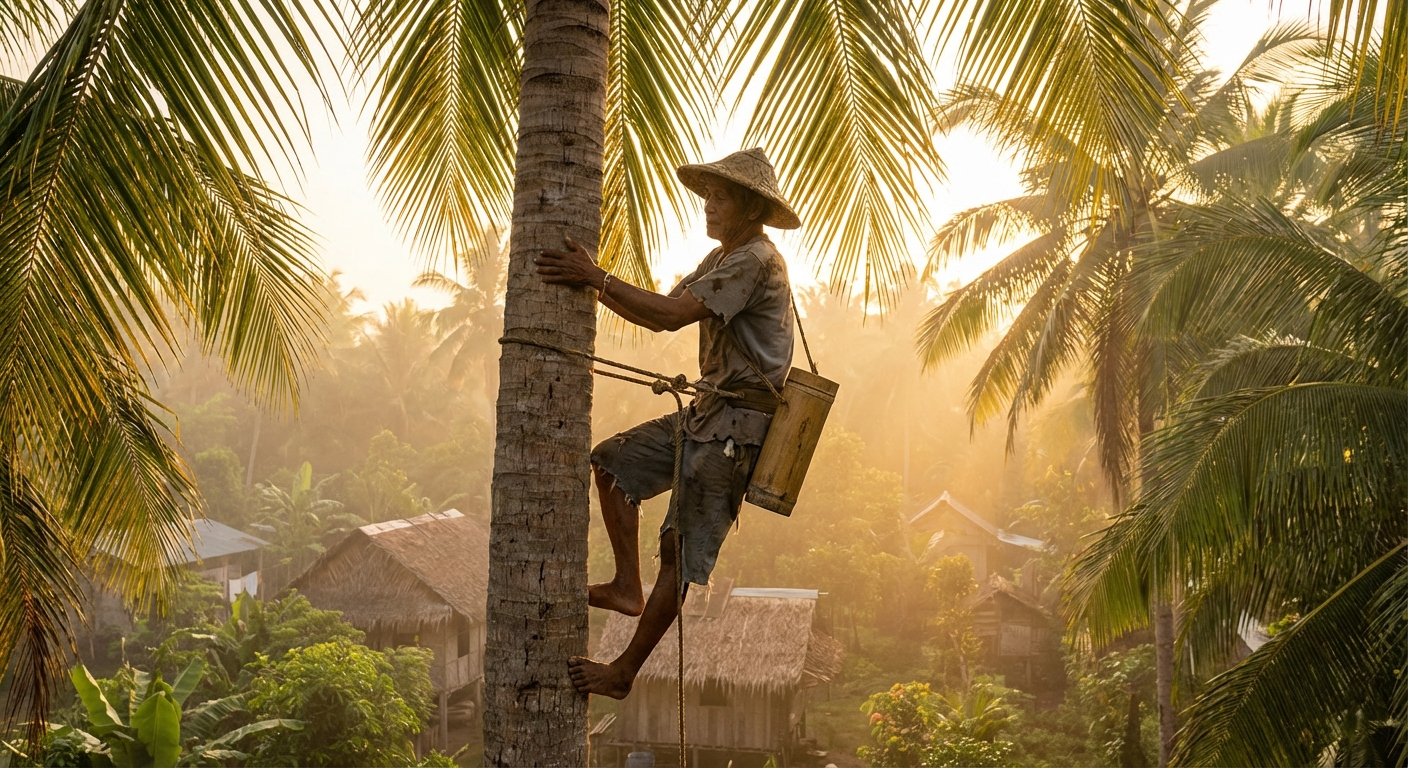
Walk through any barangay in Siquijor in the early morning hours and you may spot a figure ascending a tall coconut palm with nothing more than a sharp knife, a bamboo container, and decades of inherited skill. These are the mananggete, the tuba collectors whose daily work sustains one of the oldest continuously practiced food traditions in the Philippine islands.
What Is Tuba
Tuba is a mildly alcoholic beverage made from the sap of the coconut palm’s flower cluster, known as the spadix or inflorescence. When the sap is collected fresh, it is sweet, slightly fizzy, and nearly non-alcoholic. Within hours, natural yeasts begin fermenting the sugars, producing a drink that typically reaches 4 to 5 percent alcohol by volume within a single day.
The flavor profile of fresh tuba is unlike any commercially produced beverage. It carries a subtle sweetness with a slight tang from the beginning stages of fermentation, along with a distinctive aroma that reflects the coconut palm itself. As fermentation progresses, the sweetness diminishes and the sour, vinegary notes become more pronounced.
In many parts of the Visayas, including Siquijor, a piece of bark from the tungog tree (Ceriops tagal, a type of mangrove) is added to the collection container. This bark serves a dual purpose: it acts as a natural preservative that slows fermentation, and it imparts a distinctive reddish-pink color to the tuba. The resulting drink, sometimes called bahal when aged, has a deeper flavor with tannin-like qualities contributed by the bark.
The Mananggete: Siquijor’s Coconut Climbers
The mananggete occupy a unique position in Siquijor’s social fabric. Their occupation requires a combination of physical courage, botanical knowledge, and daily discipline that few other livelihoods demand. A working mananggete typically tends between 20 and 50 coconut palms, visiting each tree twice daily to collect the accumulated sap and prepare the spadix for the next collection.
The Daily Climb
The mananggete’s day begins before dawn. Using a series of notches cut into the trunk or a flexible bamboo ladder called a hagdan, the collector ascends palms that can reach 20 meters or more in height. At the crown of the palm, a thin slice is shaved from the tip of the spadix to reopen the flow of sap into the bamboo container, called a suga, that was positioned the previous day.
The full suga is carefully lowered using a rope, and an empty container takes its place for the next collection period. This process repeats at each tree in the mananggete’s circuit, meaning the collector may climb and descend 30 or more palms before the morning round is complete. A second round in the late afternoon collects the daytime accumulation.
The physical demands are considerable. Each climb requires upper body strength, balance, and a comfort with heights that must be cultivated over years. Most mananggete begin learning the trade as teenagers, apprenticing with fathers or uncles who teach them to read the palms, identifying which trees are productive and which should be rested.
Skills Beyond Climbing
A skilled mananggete understands the biology of the coconut palm in ways that formal botanical education often does not capture. They know how to prepare the spadix for tapping, a delicate process that involves binding the developing flower cluster with strips of palm leaf and gently bending it downward over several days to encourage sap flow. Too much pressure cracks the spadix. Too little fails to stimulate adequate production.
They also maintain their collection containers with careful hygiene, rinsing the bamboo tubes to prevent unwanted bacterial contamination that would spoil the sap before it can be properly fermented. The tungog bark pieces are replaced at regular intervals to maintain consistent preservation and coloring.
Seasonal awareness is important as well. Sap production varies throughout the year, with drier months generally producing sweeter sap in lower quantities, while the rainy season increases volume but can dilute flavor. The mananggete adjusts collection schedules and the number of active trees accordingly.
The Production Process
From Sap to Tuba
The journey from raw coconut sap to drinkable tuba is straightforward in principle but requires attention to timing. Fresh sap collected in the morning begins fermenting almost immediately when exposed to ambient temperature and airborne yeasts.
A typical production timeline looks like this:
0 to 4 hours after collection: The sap is sweet and refreshing, with minimal alcohol content. This stage is called tubig ng niyog in some regions and is consumed as a non-alcoholic refreshment. Some families prefer their tuba at this young stage.
4 to 8 hours: Fermentation produces a noticeable fizz and the flavor begins to shift from sweet to mildly sour. Alcohol content rises to approximately 2 to 3 percent. This is the most popular drinking stage for casual consumption.
8 to 24 hours: The tuba reaches full fermentation with alcohol content between 4 and 6 percent. The flavor is distinctly sour with only traces of residual sweetness. This is the stage preferred by many regular tuba drinkers.
Beyond 24 hours: Extended fermentation produces increasingly sour and acidic tuba. Left for several days to a week, the liquid transforms into coconut vinegar (sukang tuba), a staple condiment in Visayan cooking.
Bahal and Lambanog
When tuba is allowed to age for several weeks in sealed containers, it develops into bahal, a stronger and more complex drink with higher alcohol content. The aging process concentrates flavors and can produce a beverage with wine-like characteristics, though with its own distinct profile.
In some Philippine provinces, tuba is distilled to produce lambanog, a clear spirit with alcohol content ranging from 40 to 45 percent. While lambanog production is more associated with the Quezon and Laguna provinces in Luzon, small-scale distillation occasionally occurs in the Visayas. However, this practice requires careful technique to avoid dangerous methanol concentrations, and most Siquijor tuba producers focus on the fermented rather than distilled product.
Tuba in Siquijor Culture
Social Traditions
Tuba is far more than a beverage in Siquijor. It functions as a social lubricant, a ceremonial offering, and a marker of community identity. In many barangays, the afternoon tuba session serves the same social function that a pub or cafe serves in other cultures: a place and time for neighbors to gather, share news, and maintain social bonds.
The tagayan, or communal drinking session, follows an informal but understood protocol. A single glass or cup is filled and passed around the circle of drinkers, each person taking a sip or a full glass before passing it on. Refusing a turn is not considered offensive, but participation signals fellowship and trust.
During fiestas, weddings, funerals, and other community gatherings, tuba is offered alongside commercially produced alcohol. Its presence at these events carries symbolic weight, connecting the celebration to local tradition and the labor of community members who produced it.
Connection to Healing Traditions
Siquijor’s famous healing traditions occasionally incorporate tuba in their practices. Some mananambal (traditional healers) use tuba as an ingredient in herbal preparations, believing that the fermented coconut sap serves as an effective medium for extracting and delivering the medicinal properties of various plant materials.
During the Holy Week healing festivals that draw visitors from across the Philippines, tuba may appear among the ingredients gathered by healers during full moon rituals. The coconut palm itself holds symbolic significance in Philippine folk medicine, with different parts of the tree attributed with various healing properties.
Economic Significance
For many families in Siquijor, tuba production represents an important supplementary income. A productive mananggete can collect 10 to 30 liters of sap per day depending on the number of trees being tapped and seasonal conditions. This sap is sold directly to consumers, to sari-sari stores, or to vinegar producers.
The economics are modest but reliable. A liter of fresh tuba typically sells for PHP 20 to PHP 40, while aged bahal can command slightly higher prices. Coconut vinegar derived from tuba fermentation sells for PHP 30 to PHP 60 per liter and has a longer shelf life, allowing for accumulation and bulk sales.
This income stream requires minimal capital investment beyond the bamboo containers and climbing equipment. The coconut palms themselves are often owned by the mananggete or made available through informal sharing arrangements with landowners who receive a portion of the harvest.
Where to Experience Tuba in Siquijor
Local Sari-Sari Stores
The most authentic way to try tuba in Siquijor is at a neighborhood sari-sari store in any of the island’s six municipalities. These small convenience shops often stock fresh tuba, particularly in the afternoon when the morning collection has had time to develop mild fermentation. Ask for tuba and specify whether you want it fresh (matam-is, sweet) or fermented (maaslem, sour).
Market Days
Siquijor’s municipal markets, particularly in Siquijor town and Larena, often have vendors selling tuba alongside fresh produce and prepared foods. Market mornings are a good opportunity to purchase freshly collected sap at its sweetest stage.
Direct from Mananggete
If you establish rapport with locals during your stay, you may be invited to purchase tuba directly from a mananggete. This provides the freshest possible product and the opportunity to observe the collection process. Some eco-tourism initiatives and community-based tourism programs in Siquijor include tuba-tapping demonstrations as part of their cultural immersion offerings.
Restaurants and Bars
A small number of restaurants and bars on Siquijor offer tuba or tuba-based drinks on their menus, though this remains the exception rather than the rule. Some establishments in San Juan and along the coast serve tuba cocktails that blend the fermented sap with calamansi juice, honey, or fruit purees.
Responsible Tasting
If you are new to tuba, start with a small portion of the fresher, sweeter variety before progressing to more fermented versions. The taste is an acquired one, and the sourness of well-fermented tuba can be surprising for first-time drinkers.
Be aware that tuba’s alcohol content, while generally modest, can vary. Aged bahal in particular can be significantly stronger than fresh tuba, and the lack of standardized production means that alcohol levels are never precisely known. Drink at a pace that allows you to assess your tolerance.
As with any artisanal food product, basic food safety awareness is appropriate. Purchase from sources that appear to maintain clean collection and storage practices. Fresh tuba stored in clean containers and consumed within a few hours of collection presents minimal food safety concerns.
The Future of Tuba in Siquijor
The tuba tradition faces challenges common to many artisanal food practices worldwide. Younger generations in Siquijor increasingly pursue education and employment opportunities that take them away from traditional livelihoods. The physical demands and modest income of tuba collection make it less attractive compared to tourism industry jobs or overseas work.
At the same time, growing interest in local food traditions, craft beverages, and authentic cultural experiences creates new opportunities for the tuba trade. Tourism operators who incorporate tuba tasting into cultural tours provide mananggete with additional markets and income. Agricultural organizations have explored ways to improve the economic viability of coconut sap products through better processing, packaging, and marketing.
The challenge lies in supporting the tradition without transforming it into a mere tourist attraction stripped of its authentic context. The most meaningful encounters with tuba in Siquijor happen not at curated tourism experiences but in the everyday moments of island life: a shared glass with new friends at a sari-sari store, a conversation with a mananggete about his morning climb, or a fiesta table where commercially bottled beverages sit alongside a plastic jug of homemade tuba.
These moments remind us that some of the most valuable things a place can offer visitors are not attractions or activities but glimpses into the living traditions that give a community its character. In Siquijor, the daily rhythm of the mananggete’s climb and the communal sharing of the harvest represent a connection between people, their landscape, and their history that continues to endure.
Related Culture & History

Siquijor Bangka Boats: The Island's Traditional Boat-Building Heritage
Discover the centuries-old art of bangka boat building in Siquijor. Meet the master builders, learn the construction process, and explore where outrigger boats shape island life.
Siquijor Coconut Farming: The Island's Most Important Agricultural Tradition
Discover how coconut farming shapes life on Siquijor Island. From copra production to tuba wine, learn about the agricultural tradition that sustains island communities.
Siquijor's Mananambal: A Respectful Guide to Healing Traditions
Understanding Siquijor's traditional healers (mananambal), their practices, history, and how visitors can respectfully engage with this living cultural heritage.