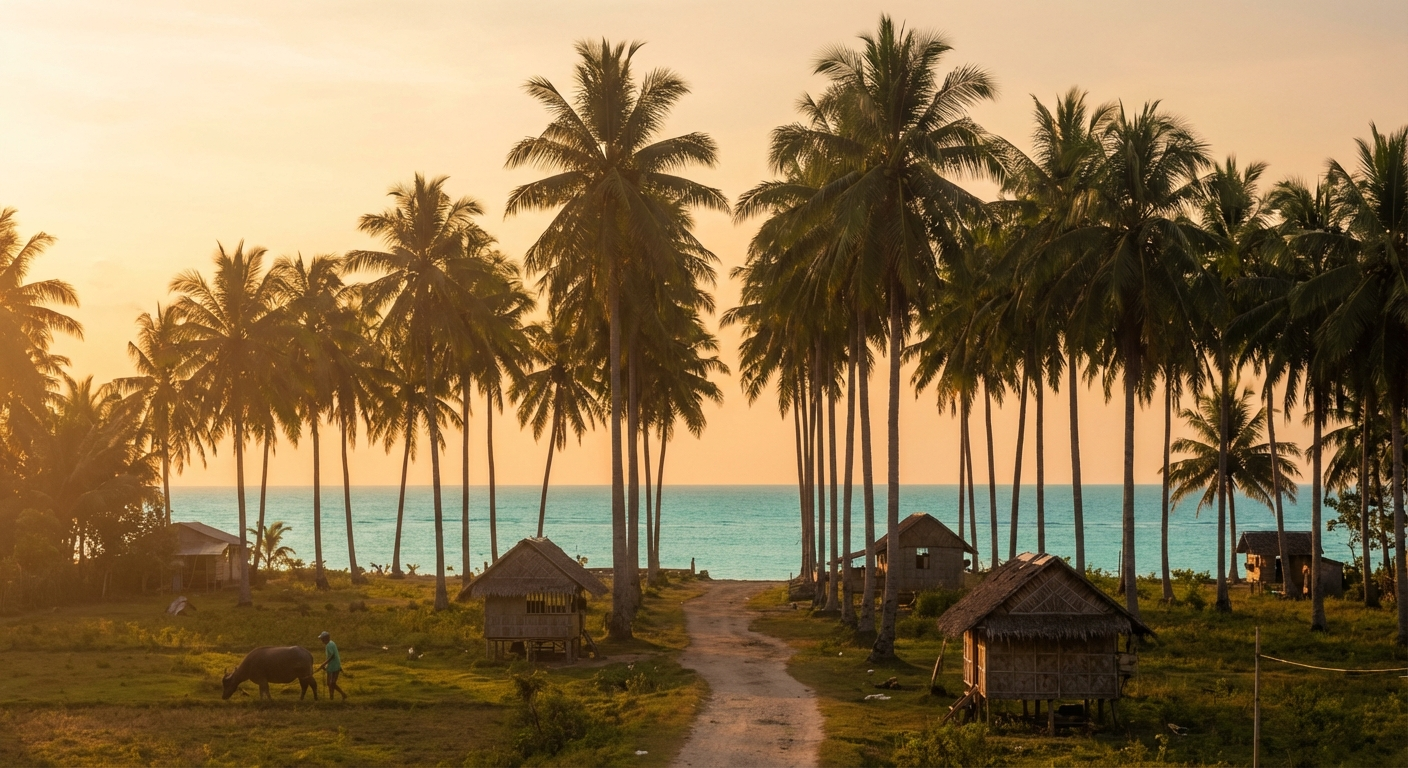
Siquijor Coconut Farming: The Island's Most Important Agricultural Tradition
Discover how coconut farming shapes life on Siquijor Island. From copra production to tuba wine, learn about the agricultural tradition that sustains island communities.
Drive along any road in Siquijor and one thing becomes immediately clear: coconut palms define the island’s landscape. They line every coast, fill the interior valleys, and climb the lower slopes of Mount Bandilaan. More than scenery, these trees represent the economic backbone that has sustained Siquijor’s communities for generations.
While tourism has grown significantly in recent years, coconut farming remains the primary livelihood for a large portion of the island’s roughly 105,000 residents. Understanding this agricultural tradition offers visitors a deeper appreciation of life on Siquijor beyond the beaches and waterfalls.
A Centuries-Old Industry
Coconut cultivation in the Philippines predates Spanish colonization by centuries, and Siquijor’s coconut groves are among the oldest in the Visayas region. Early Filipino communities recognized the coconut palm as a complete resource — providing food, drink, shelter material, oil, and fiber from a single plant.
Spanish colonial records from the 17th and 18th centuries document Siquijor as a producer of coconut oil, which was traded across the Visayas and shipped to Manila. The island’s relatively flat terrain and consistent rainfall created ideal growing conditions, and colonial administrators encouraged expanded planting to fuel the oil trade.
By the American colonial period in the early 20th century, copra — dried coconut meat used to extract oil — had become the Philippines’ most important export commodity. Siquijor’s economy was fully integrated into this national industry, with copra warehouses operating in every municipality and regular shipments leaving from the ports of Siquijor town and Larena.
How Coconut Farming Works on Siquijor
The Coconut Lifecycle
A coconut palm planted from seed takes six to eight years to begin producing fruit. Once mature, a healthy tree can produce 50 to 200 coconuts per year, depending on soil quality, rainfall, and care. The trees continue producing for 60 to 80 years, making them a multigenerational investment.
On Siquijor, most coconut groves were planted decades ago, and many trees now in production were started by the grandparents or great-grandparents of current farmers. This long timeline gives coconut farming a deeply familial character. A grove is not just an economic asset but a family inheritance, carrying memories and obligations across generations.
Harvesting
Coconut harvesting on Siquijor follows methods that have changed little over the centuries. Skilled harvesters climb the trees using only their hands and feet, sometimes assisted by a rope loop around the trunk. At heights of 20 meters or more, they use a curved blade called a sanggot to cut ripe coconuts, which fall to the ground below.
This work is physically demanding and carries real risk. Experienced climbers can harvest 30 to 50 trees in a single day, moving through a grove with remarkable speed and agility. On Siquijor, harvesting typically occurs every 45 to 60 days, timed to when the majority of nuts in a grove have reached full maturity.
Some farmers have adopted long-handled pole harvesters for shorter trees, but traditional climbing remains the dominant method, particularly for the tall varieties that make up most of Siquijor’s groves.
Copra Production
After harvesting, the coconuts are split open and the white meat is removed from the shell. This meat must then be dried to produce copra, which is sold to dealers who transport it to oil-processing facilities on larger islands.
On Siquijor, copra drying takes two primary forms. Sun drying involves spreading the coconut meat on raised platforms or concrete floors and leaving it exposed to direct sunlight for several days. This method is weather-dependent and works best during the dry season months of February through May.
Kiln drying uses a simple wood-fired oven called a tapahan. The coconut meat is placed on a wire mesh above a slow-burning fire, typically fueled by coconut husks and shells. Kiln drying is faster and more reliable than sun drying, taking only two to three days regardless of weather. The tapahan is a common sight in Siquijor’s rural barangays, often built under a simple roof near the coconut grove.
Once dried, copra is weighed and sold to local buyers, who aggregate it for shipment off the island. Copra prices fluctuate with global coconut oil markets, creating economic uncertainty for farming families. When prices drop, the effects ripple through Siquijor’s entire economy, reducing spending in local shops and markets.
Beyond Copra: The Full Coconut Economy
Tuba: Coconut Wine
Perhaps the most culturally significant coconut product on Siquijor is tuba, the naturally fermented sap harvested from coconut flower clusters. Tuba production is a specialized skill, and the men who practice it — called manananguete — are respected figures in their communities.
The process begins with climbing a mature palm and cutting the tip of an unopened flower cluster. A bamboo container called a kawit is attached to collect the sap that flows from the cut. The manananguete returns twice daily — once at dawn and once in the late afternoon — to collect the accumulated sap and make fresh cuts to maintain the flow.
Fresh tuba is a mildly sweet, slightly fizzy drink with low alcohol content. Within hours of collection, natural yeasts begin fermentation, and by evening the tuba takes on a more pronounced alcoholic character. Left to ferment further, it becomes bahalina, a stronger wine that some families age for months or even years.
Tuba is deeply woven into Siquijor’s social fabric. It is served at fiestas, shared among friends gathering in the afternoon, and offered to visitors as a gesture of hospitality. Commercial tuba is also sold throughout the island, with vendors often setting up along roadsides in the late morning when the day’s first harvest is available.
Virgin Coconut Oil
In recent years, virgin coconut oil (VCO) production has emerged as a value-added alternative to copra for some Siquijor farmers. VCO is extracted from fresh coconut meat without the use of heat or chemicals, preserving its natural flavor and nutritional properties.
Several small-scale VCO operations now exist on the island, some organized as cooperatives that allow individual farmers to pool their harvest for more efficient processing. The finished product sells at significantly higher prices than copra, particularly in health-conscious domestic and export markets.
The provincial government has supported VCO development through training programs and equipment grants, viewing it as a pathway to higher incomes for coconut farming families.
Coir and Handicrafts
Coconut husks yield coir fiber, which is processed into rope, doormats, plant pots, and erosion-control materials. On Siquijor, coir processing provides supplementary income for some farming households, particularly women who weave the fiber into marketable products.
Coconut shells are carved into bowls, utensils, and decorative items sold to tourists in Siquijor’s markets and souvenir shops. The hard, dark wood of old coconut trunks is also used in furniture making and construction.
The Human Side of Coconut Farming
Land Tenure and Family
Most coconut farms on Siquijor are small holdings of one to five hectares, owned and operated by individual families. These farms are typically inherited, with land passing down through generations. The family-scale nature of the industry means that coconut farming is inseparable from family life.
Children grow up helping in the grove — gathering fallen nuts, feeding dried husks into the kiln, and eventually learning to climb. While many young Siquijodnons now pursue education and employment off the island, the family farm remains a safety net and a point of identity.
Economic Realities
Coconut farming provides a modest but stable income for most practitioners. A farmer with a moderate-sized grove might earn between 3,000 and 8,000 pesos per harvest cycle from copra sales, depending on the number of productive trees and current market prices.
This income is supplemented by tuba sales, coir processing, and increasingly by tourism-related work. Many farming families on Siquijor now operate homestays, rent motorcycles, or provide guide services alongside their agricultural activities.
The Philippine Coconut Authority provides some support through seedling distribution, fertilizer subsidies, and replanting programs. On Siquijor, these programs help address the challenge of aging groves, where many trees are past their peak productive years and need replacement.
Challenges and Adaptation
Climate variability presents ongoing challenges for Siquijor’s coconut farmers. Strong typhoons can destroy trees that took decades to mature. Extended dry periods reduce nut production. Rising temperatures may alter pest and disease patterns.
The coconut scale insect infestation that affected parts of the Visayas in recent years raised concerns on Siquijor, though the island’s relative isolation provided some natural protection. Local agricultural officers maintain monitoring programs to detect pest threats early.
Market volatility remains the most immediate concern. Global coconut oil prices are influenced by factors far beyond any individual farmer’s control, from Indonesian palm oil production to shifting consumer preferences in Europe and North America.
Visiting Coconut Farms on Siquijor
Travelers interested in seeing coconut farming firsthand have several options:
Drive the interior roads. The roads connecting Siquijor’s coastal municipalities pass through extensive coconut groves. The stretch between Maria and Lazi is particularly scenic, with towering palms lining both sides of the road for kilometers.
Visit a copra drying operation. In rural barangays, you can often see copra drying in process simply by looking along the roadside. If you stop and express polite interest, farmers are generally happy to explain the process. A small purchase of coconut products or a modest tip for their time is appreciated.
Try fresh tuba. Ask your accommodation host or a local guide to help you find a tuba vendor. The experience of drinking freshly harvested coconut wine, still slightly warm from the morning sun, is one of the most authentically local things you can do on Siquijor.
Watch a tree climber. During harvest periods, you may encounter manananguete or harvesters working in the groves. Observing their skill from a safe distance is fascinating. Never stand directly beneath a tree being harvested.
Buy local coconut products. Siquijor’s markets sell virgin coconut oil, coconut vinegar, coconut candy, and coir handicrafts. Purchasing these products directly supports farming families and cooperatives.
The Future of Coconut Farming on Siquijor
As tourism becomes an increasingly important part of Siquijor’s economy, the relationship between coconut farming and the island’s identity deserves attention. The palm-lined landscapes that visitors photograph are not natural wilderness but the result of generations of agricultural work. The rural character that makes Siquijor appealing depends on the continuation of farming traditions.
Several initiatives point toward a sustainable future. Agri-tourism programs that invite visitors into working farms create new revenue streams while building appreciation for agricultural life. Value-added processing through VCO and coconut-based food products captures more economic value on the island rather than exporting raw copra.
Replanting programs ensure that young trees will replace aging ones, maintaining the groves that define Siquijor’s landscape. And the continued practice of tuba harvesting, coir weaving, and traditional copra production keeps alive skills and knowledge that connect the island’s present to its past.
For visitors, taking time to notice and appreciate the coconut palms that surround you on Siquijor is a way of engaging with the island’s authentic character. Behind every tree is a family, a tradition, and a way of life that has shaped this place for centuries.
Related Culture & History
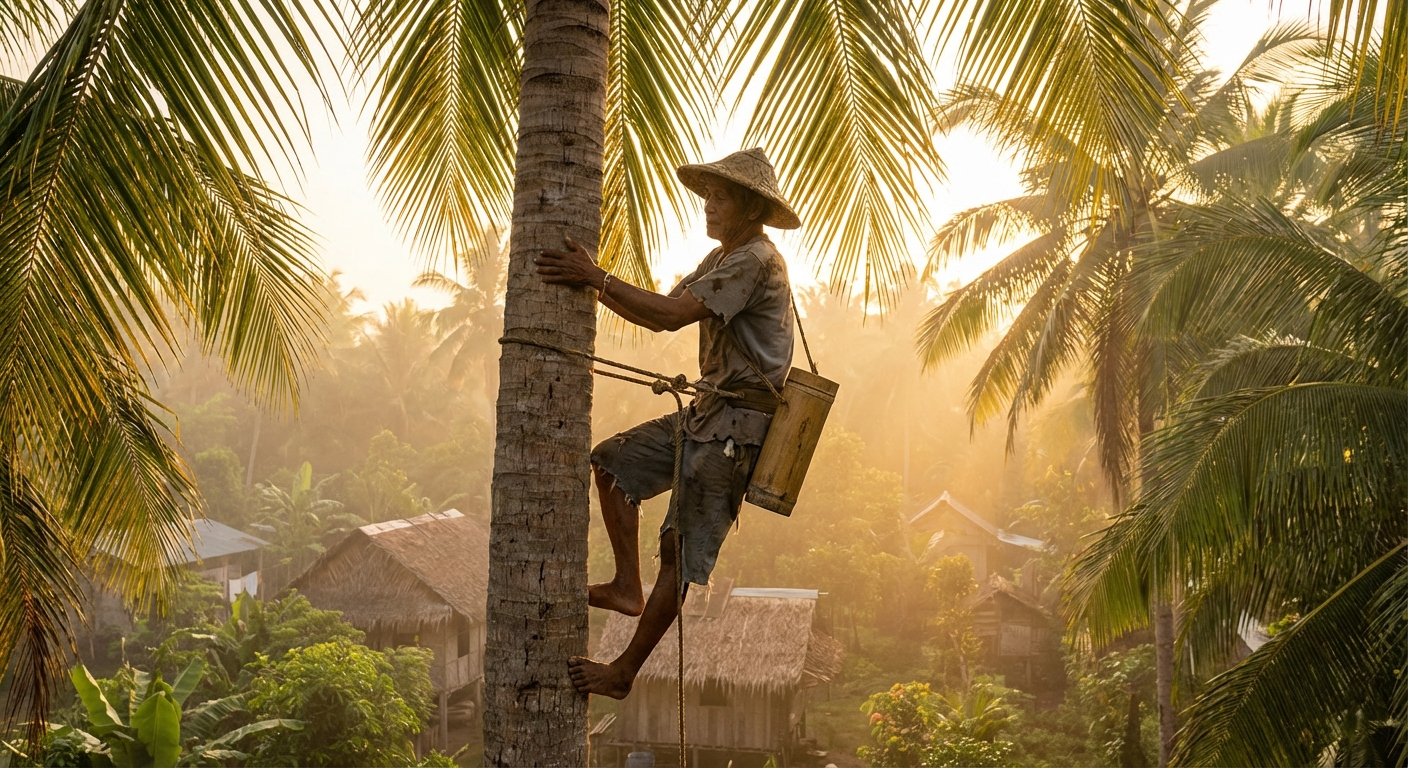
Siquijor Tuba: The Island's Living Coconut Wine Tradition
Explore the centuries-old tradition of tuba (coconut wine) making in Siquijor. Learn about the mananggete collectors, the production process, and where to experience this unique island drink.
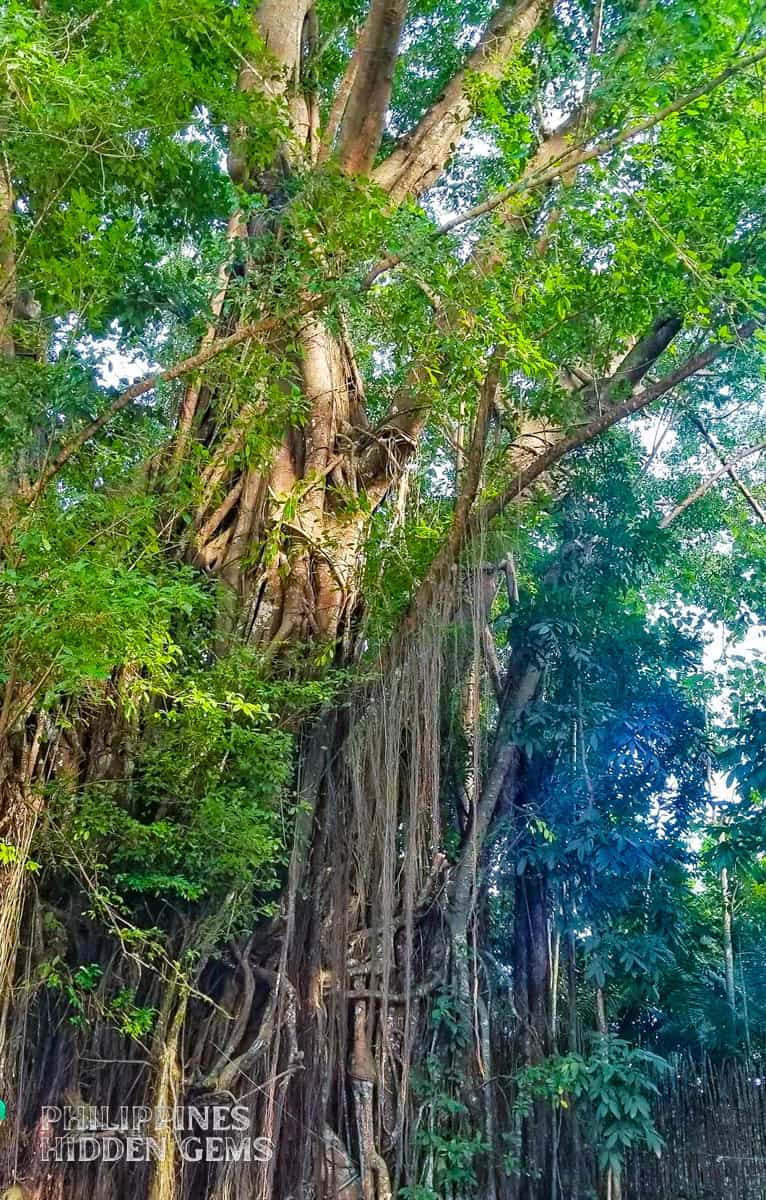
Siquijor's Mananambal: A Respectful Guide to Healing Traditions
Understanding Siquijor's traditional healers (mananambal), their practices, history, and how visitors can respectfully engage with this living cultural heritage.
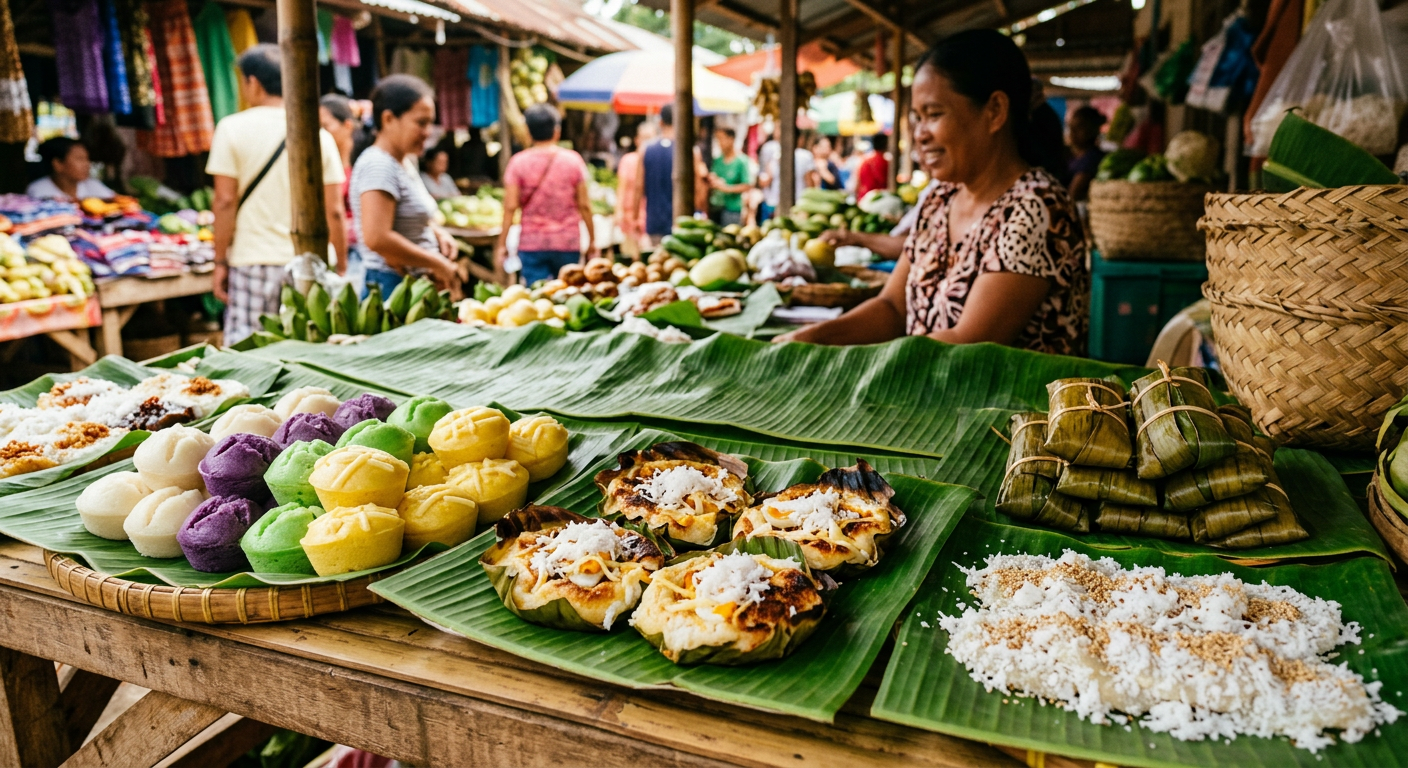
Siquijor Kakanin Guide: Traditional Rice Cakes and Sweets of the Mystic Island
Explore the traditional kakanin and rice cakes of Siquijor Island. From bibingka and suman to puto and palitaw, discover where to find authentic Filipino sweets made using generations-old recipes.