Siquijor Kakanin Guide: Traditional Rice Cakes and Sweets of the Mystic Island
Explore the traditional kakanin and rice cakes of Siquijor Island. From bibingka and suman to puto and palitaw, discover where to find authentic Filipino sweets made using generations-old recipes.
Kakanin is the Filipino term for traditional rice-based cakes and sweets, a category of food so deeply woven into Philippine culture that no fiesta, church gathering, or family celebration is complete without them. The word itself comes from the root word kanin, meaning cooked rice, reflecting the central role of rice in these preparations. In Siquijor, kakanin traditions have survived largely unchanged for generations, passed from grandmother to granddaughter through demonstration rather than written recipes, producing sweets that taste distinctly different from their commercial counterparts sold in Manila bakeries and grocery stores.
What makes Siquijor’s kakanin special is the quality and freshness of the ingredients. The island produces its own glutinous rice, coconuts are harvested daily from trees that grow within walking distance of every kitchen, and banana leaves used for wrapping come from the backyard rather than a warehouse. These ingredients are processed by hand using traditional methods that commercial producers abandoned decades ago in favor of speed and scale. The result is a texture, flavor, and aroma that manufactured kakanin simply cannot replicate.
Bibingka: The Quintessential Filipino Rice Cake
Bibingka holds a special place in Filipino food culture, traditionally associated with the Christmas season and the Simbang Gabi (dawn masses) that precede it. In Siquijor, however, bibingka is available year-round from home-based bakers and market vendors, each with their own variation on the foundational recipe of ground rice, coconut milk, sugar, and eggs.
Traditional Siquijor bibingka is baked in clay pots lined with banana leaves, heated from both top and bottom using charcoal. The banana leaf lining imparts a subtle smoky-sweet aroma that is impossible to achieve with modern baking pans. The cake itself has a slightly dense, moist texture with a golden brown top that carries a gentle char from the direct heat above.
The most traditional version uses galapong, a paste made from soaking glutinous rice overnight and then grinding it on a stone metate. This labor-intensive process produces a smoother, more delicate texture than the commercial rice flour used by bakeries. In Siquijor, a handful of older bakers in Lazi and Maria still use the stone-grinding method, and finding their bibingka is worth the effort.
Toppings vary between households. Salted duck eggs, grated fresh coconut, and a drizzle of coconut cream are the classic combination. Some Siquijor bakers add slices of local cheese on top, which melts into a salty, slightly tangy layer that contrasts beautifully with the sweet cake below. A single piece of freshly baked bibingka costs between 15 and 30 pesos at markets and roadside stands.
Suman: Wrapped Treasures of Glutinous Rice
Suman refers to a family of glutinous rice preparations wrapped in leaves and either steamed or boiled. Siquijor produces several regional variations, each reflecting the specific traditions of the municipality where it originates. The common thread is malagkit (glutinous rice), coconut milk, and careful wrapping in banana or coconut leaves that serve as both cooking vessel and plate.
Suman sa lihiya uses rice soaked in lye water (lihiya), which gives the cooked rice a distinctive yellow color, slightly alkaline flavor, and a remarkably smooth, gelatinous texture. The lye water is traditionally made by filtering water through wood ash, though food-grade lye is now more commonly used. Suman sa lihiya is eaten with sugar or ripe mango, and the combination of the chewy, barely sweet rice with fresh mango is one of the great simple pleasures of Filipino cuisine.
Suman sa gata cooks the glutinous rice directly in coconut milk, producing a rich, creamy result that needs no accompaniment. The rice absorbs the coconut milk during cooking, becoming infused with its fat and sweetness. In Siquijor, some families add strips of langka (jackfruit) to the mixture before wrapping, creating pockets of fruity sweetness throughout the suman.
Budbud is the Visayan term for suman, and in Siquijor, you will hear this word more often than the Tagalog equivalent. Budbud kabog is a regional specialty made from millet rather than rice, wrapped in palm leaves and cooked with coconut milk. The millet gives the finished product a slightly grainier texture and a nutty flavor that distinguishes it from standard rice suman. While more commonly associated with Cebu, Siquijor vendors occasionally produce budbud kabog for special occasions.
Puto: The Steamed Rice Cake with Infinite Variations
Puto is a steamed rice cake that appears in virtually every Filipino celebration, from baptisms to funerals. The basic version is white, slightly sweet, and fluffy, with a texture somewhere between a muffin and a dumpling. Puto serves as both a snack on its own and a companion to savory dishes, particularly dinuguan (pork blood stew), where its mild sweetness balances the rich, intensely flavored stew.
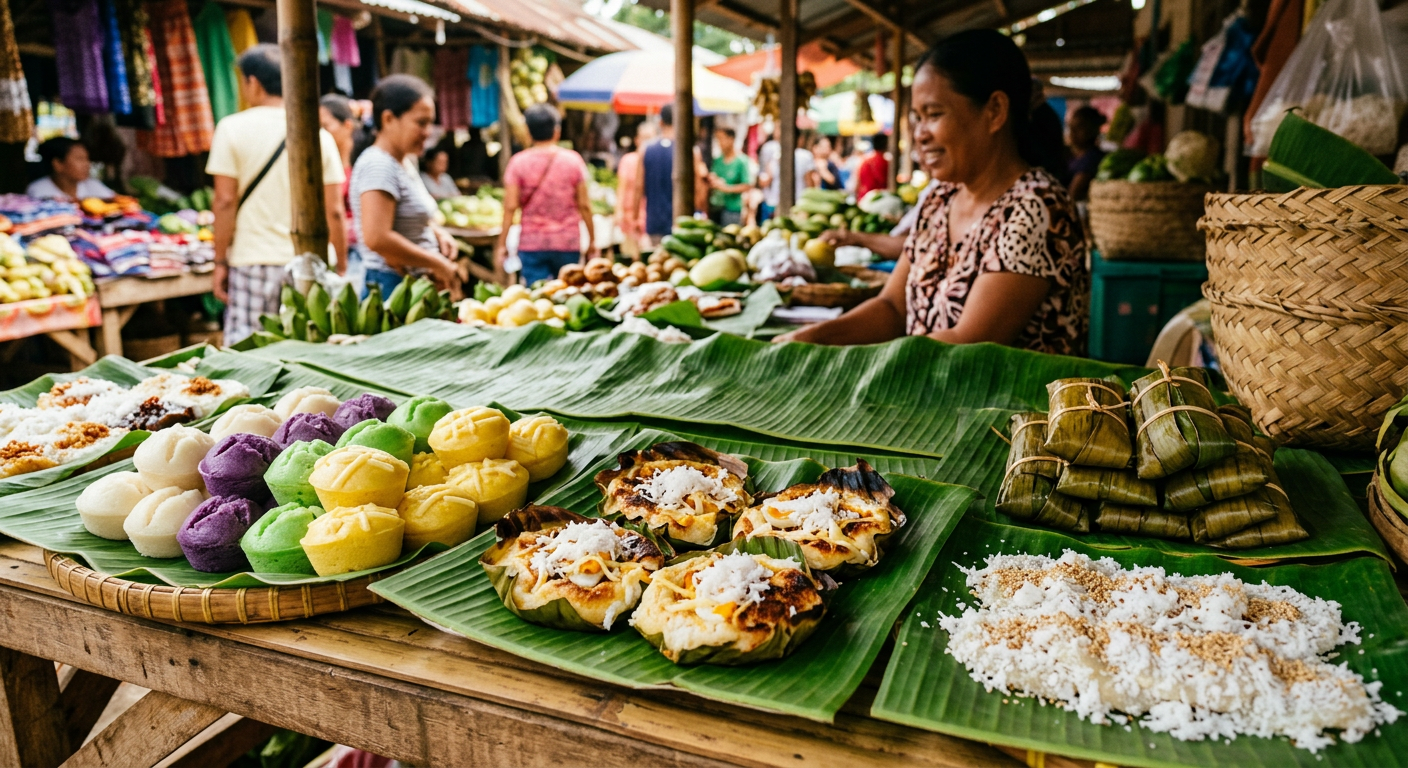
In Siquijor, puto is most commonly found at the public markets in Siquijor town and Larena, where vendors display them in neat rows on banana-leaf-lined trays. Colors range from white to purple (colored with ube or pandan extract), and sizes vary from bite-sized morsels to palm-sized rounds. The price is remarkably affordable, with six to eight pieces typically sold for 20 to 30 pesos.
Puto cheese is a popular variation that tops each cake with a slice of cheddar cheese before steaming. The cheese melts slightly into the surface, creating a salty-sweet combination that has made this version one of the most requested kakanin at Filipino gatherings. Puto maya, made with sticky rice colored yellow with turmeric, is a Visayan specialty that Siquijor vendors prepare especially for morning customers who eat it with ripe mango and a cup of sikwate (hot chocolate made from local cacao tablets).
Palitaw: The Floating Rice Cake
The name palitaw comes from the Tagalog word litaw, meaning to float or surface, describing exactly how you know this kakanin is cooked. Flat, oval-shaped cakes of glutinous rice dough are dropped into boiling water, and when they rise to the surface, they are done. The simplicity of the technique belies the delicious result.
Freshly cooked palitaw is rolled in a mixture of grated coconut, sesame seeds, and sugar. The warm, chewy rice cake picks up the coating, creating a contrast between the smooth, dense interior and the textured, crunchy-sweet exterior. Palitaw should be eaten within hours of preparation, as it hardens and loses its characteristic chewiness as it cools.
In Siquijor, palitaw appears most often at afternoon merienda time, roughly between 3:00 and 5:00 PM, when vendors set up near schools and public areas. It is one of the cheapest kakanin available, with a serving of three to four pieces costing just 15 to 20 pesos. The sesame seed coating is a distinctive touch that elevates what might otherwise be a simple rice cake into something genuinely memorable.
Biko: Sticky Rice Caramel Perfection
Biko is a baked glutinous rice cake that combines malagkit rice with coconut milk and brown sugar, topped with a thick layer of latik, which is coconut cream reduced until it caramelizes into golden brown curds. The resulting dessert is dense, sticky, deeply sweet, and utterly addictive.
Making proper latik requires patience. Coconut cream is heated slowly in a pan, stirring constantly as the water evaporates and the coconut solids begin to separate and brown. Done correctly, latik has a nutty, caramel flavor with a slight crunch. Done poorly, it burns. The quality of the latik is what separates good biko from great biko, and experienced Siquijor bakers take considerable pride in their latik-making skills.
Biko is traditionally a celebration food, prepared for fiestas and family gatherings. However, it also appears at Siquijor’s public markets, particularly on weekends and during the barangay fiesta season that rotates through the island’s communities throughout the year. A slab of biko large enough for two to three servings typically costs 30 to 50 pesos.
Espasol: The Coconut-Dusted Cylinder
Espasol is a cylindrical kakanin made from toasted glutinous rice flour and coconut milk, rolled in additional toasted rice flour to prevent sticking. The toasting process gives the rice flour a nutty, almost graham-cracker-like flavor that is unique among Filipino rice cakes. The texture is soft and slightly powdery, melting on the tongue with a concentrated coconut sweetness.
While espasol is most commonly associated with Laguna province in Luzon, Siquijor has its own tradition of preparing similar toasted rice confections. Local versions sometimes incorporate ground peanuts or a filling of sweetened coconut, adding layers of flavor and texture to the basic preparation.
Espasol travels well, as the toasted flour coating keeps the pieces from sticking together. This makes it a practical pasalubong (homecoming gift) and a good snack for island exploring. Look for it at the market in Siquijor town, where vendors wrap several pieces in banana leaf or cellophane for 25 to 40 pesos per package.
Sapin-Sapin: Layers of Color and Flavor
Sapin-sapin, meaning layers, is one of the most visually striking kakanin in the Filipino repertoire. It consists of three or more layers of glutinous rice flour steamed one on top of another, each colored and flavored differently. The traditional version uses ube (purple yam) for the purple layer, coconut for the white layer, and jackfruit for the yellow layer, creating a rainbow-striped cross-section when sliced.
Making sapin-sapin demands precision. Each layer must be steamed until set before the next layer is poured on top, and the consistency of each batter must be exact. Too thick, and the layers will not bond. Too thin, and the colors bleed together. Siquijor bakers who produce sapin-sapin typically make it for special orders and fiestas rather than daily market sales.
When you do find sapin-sapin in Siquijor, it is usually sold in slabs or slices at the market, topped with latik. The combination of textures and flavors across the layers, from the earthy sweetness of ube to the tropical fragrance of jackfruit, makes it one of the most complex and rewarding kakanin to eat.
Kutsinta: The Brown Sugar Rice Cake
Kutsinta is a steamed rice cake made with brown sugar, lye water, and rice flour, producing a distinctively brown, translucent appearance. Its texture is firm yet springy, with a mild sweetness and slight chewiness that makes it a perfect snack. Kutsinta is almost always served with freshly grated coconut, which adds moisture and a contrasting white color.
The alkaline quality from the lye water gives kutsinta its characteristic bounce and chew, similar to how lye water affects suman sa lihiya. Without it, the rice cake would be dense and crumbly rather than elastic. The brown sugar provides a depth of flavor that white sugar cannot match, with caramel and molasses notes that complement the coconut topping.
In Siquijor, kutsinta is a morning staple, sold alongside puto at market stalls. The two are often purchased together, as their contrasting colors, textures, and flavors make them natural companions. A set of six kutsinta with a generous portion of grated coconut costs about 20 to 25 pesos.
Where to Find Kakanin in Siquijor
The most reliable source for kakanin is the Siquijor Public Market in the capital town. Morning visits between 6:00 and 9:00 AM offer the freshest and widest selection, as home bakers deliver their products at dawn. The market hall has several regular vendors who specialize in kakanin, with their offerings varying by day.
The Larena market, near the port where most ferries arrive, also has kakanin vendors. Travelers arriving on morning ferries can buy fresh puto, bibingka, and suman as an immediate introduction to Siquijor’s food culture. The prices at Larena are comparable to those in Siquijor town.
Lazi municipality has a reputation for some of the best traditional cooking on the island. The area around Lazi Church, the oldest stone convent in Asia, hosts informal food vendors during weekends and church events. Bibingka from Lazi bakers is particularly well-regarded among locals.
During barangay fiestas, which occur throughout the year as each community celebrates its patron saint, kakanin production increases dramatically. If you happen to visit during a local fiesta, you will find tables laden with home-prepared kakanin offered to visitors alongside other dishes. Participating in a fiesta feast is one of the most authentic food experiences available in Siquijor.
The Role of Kakanin in Siquijor Culture
Kakanin in Siquijor is more than food. It carries social and spiritual significance that connects the present to ancestral traditions. Offering kakanin during prayers, feasts, and gatherings is an act of community and generosity. When a family prepares kakanin for a fiesta, they prepare enough for neighbors, visitors, and anyone who happens to pass by. Refusing an offered piece of kakanin would be considered impolite.
The preparation itself is communal. Making suman or bibingka for a large gathering involves multiple family members and sometimes neighbors, with tasks divided according to experience. The older women typically handle the most critical steps, like gauging the consistency of the batter or timing the steaming, while younger helpers grate coconut, prepare banana leaves, and tend the fire. These kitchen sessions transfer knowledge that no written recipe can fully capture, preserving techniques that have been refined over centuries.
For travelers, buying and eating kakanin is a way to participate in this tradition. Even a simple purchase at the market supports home-based bakers who maintain skills that commercial production is slowly displacing. Every piece of hand-wrapped suman or charcoal-baked bibingka represents hours of preparation by someone who learned the craft from their mother, who learned it from theirs.
Tips for Enjoying Kakanin in Siquijor
Buy kakanin early in the morning for the best selection and freshness. Most varieties are prepared before dawn and sell out by mid-morning.
Eat kakanin the same day you buy it. Most varieties do not contain preservatives and are best consumed within hours of preparation. Refrigeration extends shelf life by a day, but the texture changes.
Pair sticky rice kakanin with fresh mango when in season (March through June). The combination of chewy glutinous rice and sweet mango is a Filipino classic that tastes even better on a tropical island.
Do not be afraid to ask vendors about ingredients if you have dietary restrictions. Most kakanin is naturally gluten-free (made from rice flour), but some varieties contain eggs, dairy, or food coloring. Vendors can usually describe the ingredients in basic English.
Try at least one kakanin variety with sikwate, the traditional hot chocolate made from roasted cacao tablets. Several cafes in Siquijor town and San Juan now serve sikwate alongside traditional merienda items, creating a pairing that has sustained Filipino afternoons for centuries.
Related Culture & History
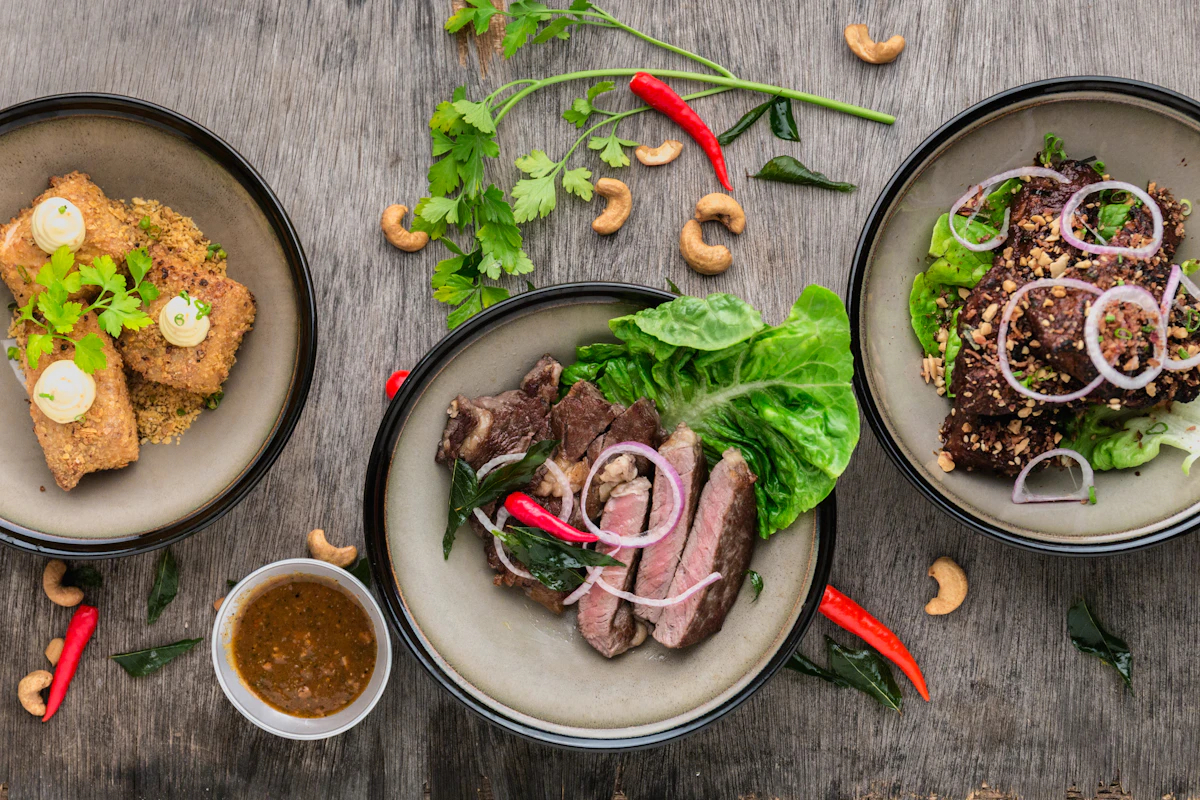
Traditional Siquijor Cuisine: Dishes You Can't Find Anywhere Else
Explore Siquijor's unique local dishes — from ginataang kalabasa to tuba vinegar specialties and the island's distinctive take on Filipino cooking.

Siquijor's Mananambal: A Respectful Guide to Healing Traditions
Understanding Siquijor's traditional healers (mananambal), their practices, history, and how visitors can respectfully engage with this living cultural heritage.
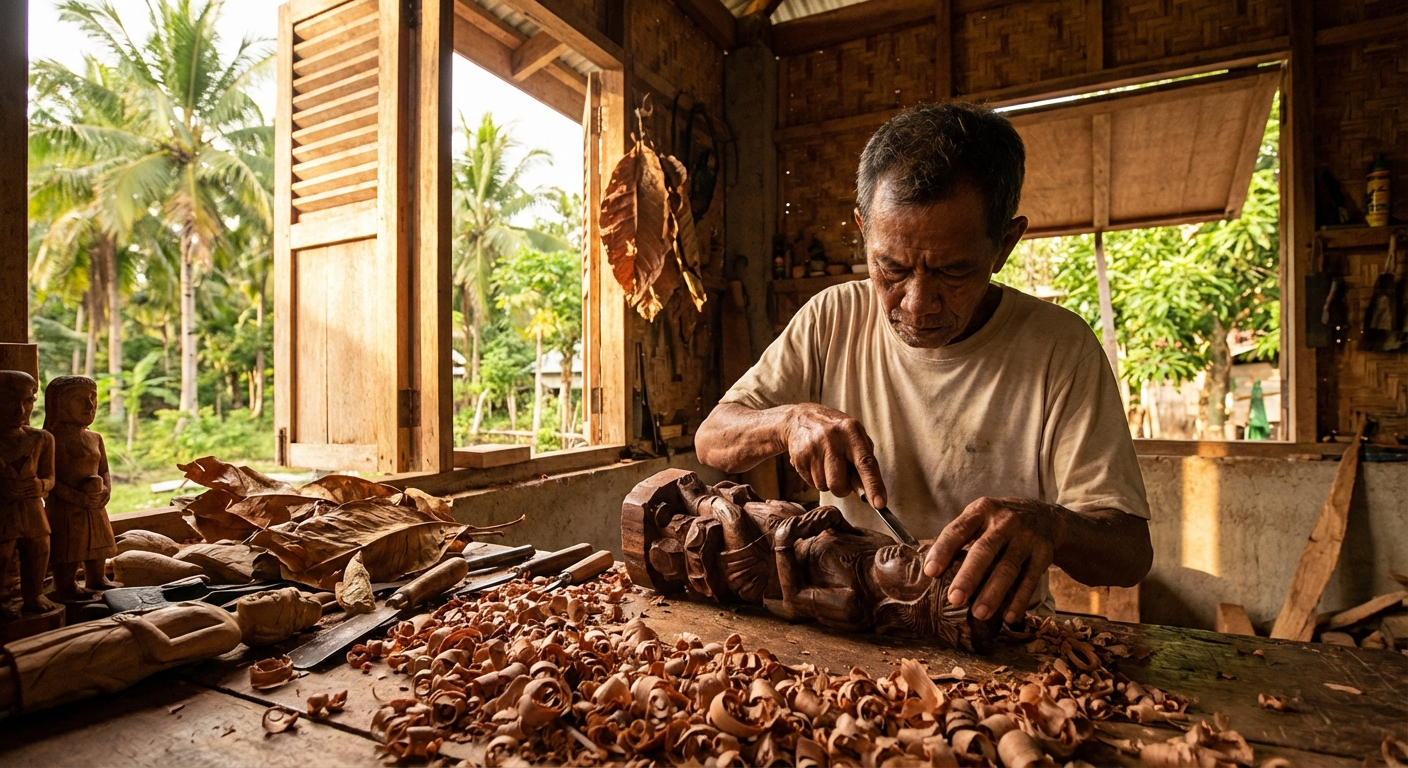
Siquijor Woodcraft and Traditional Artisans: The Island's Hidden Creative Heritage
Discover the woodcarving traditions, skilled artisans, and handcrafted souvenirs that reveal Siquijor's lesser-known creative heritage beyond its mystical reputation.