Siquijor Bangka Boats: The Island's Traditional Boat-Building Heritage
Discover the centuries-old art of bangka boat building in Siquijor. Meet the master builders, learn the construction process, and explore where outrigger boats shape island life.
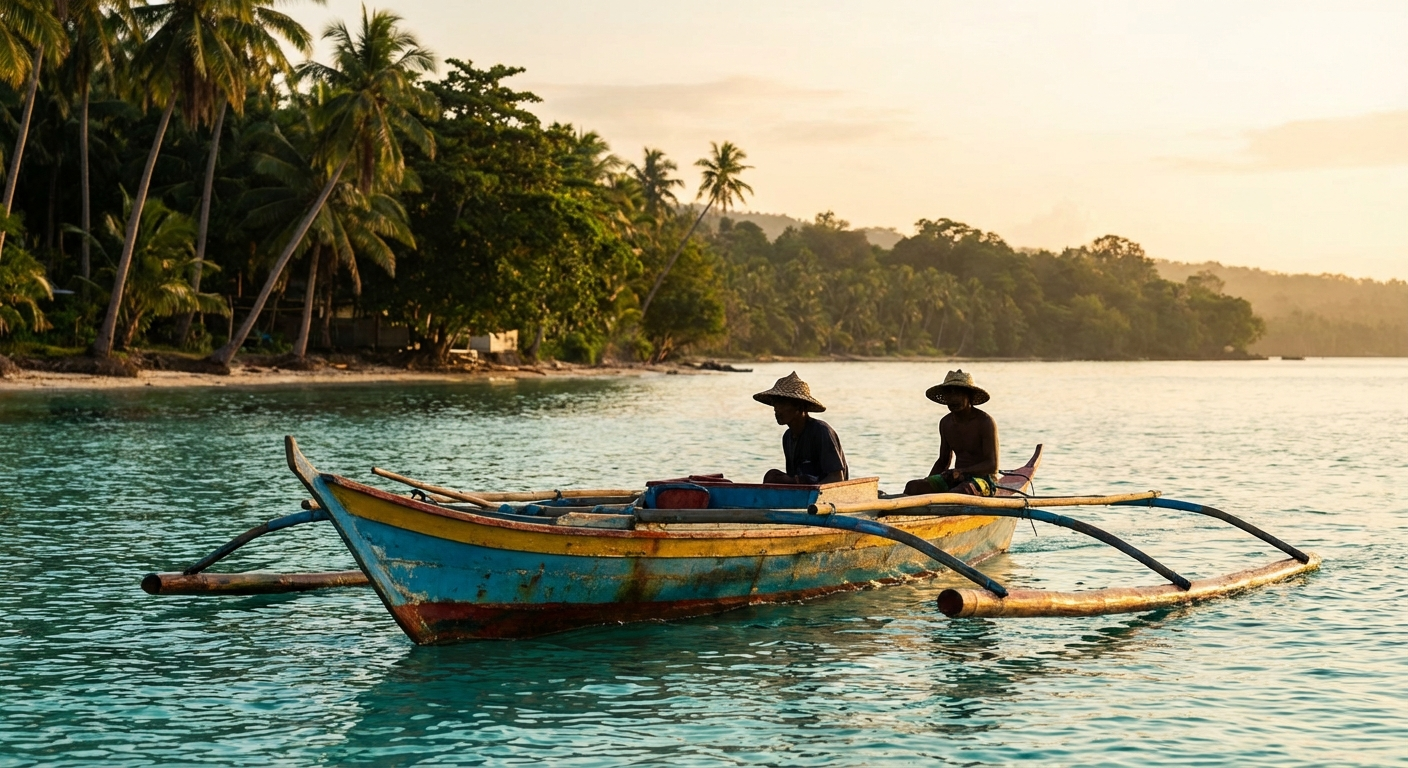
Stand at any pier in Siquijor at dawn and you will see them: narrow wooden hulls flanked by bamboo outriggers, painted in colors that range from deep ocean blue to sun-bleached turquoise, rocking gently in the shallows as fishermen load nets, fuel, and thermoses of coffee. These are bangka, the traditional outrigger boats that have defined maritime life in the Philippines for over a thousand years.
In Siquijor, the bangka is not a relic. It is not a museum exhibit or a photo opportunity staged for tourists. It is a working vessel that feeds families, connects communities, and carries the accumulated knowledge of generations of island builders who learned their craft not from textbooks but from the grain of the wood itself.
This is the story of how Siquijor builds its boats, why the tradition matters, and where visitors can witness one of the most authentic expressions of Filipino maritime heritage still practiced in the Visayas.
The Bangka in Philippine History
The double-outrigger canoe is one of the oldest boat designs in the Austronesian world. Archaeological evidence and linguistic studies suggest that outrigger technology originated in Southeast Asia more than 4,000 years ago, spreading across the Pacific and Indian Oceans as Austronesian peoples migrated to islands from Madagascar to Easter Island.
In the Philippines, the bangka (also spelled banca or banka) became the fundamental watercraft for inter-island travel, fishing, trade, and warfare. Spanish colonial records from the 16th century describe fleets of outrigger boats carrying goods between the Visayan islands, and the earliest documented encounters between Spanish explorers and Filipino communities often took place aboard or alongside these vessels.
Siquijor, as a small island with no airport until very recently and limited road infrastructure for much of its history, depended on the bangka more than most places. Every major settlement on the island sits near the coast, and the sea has always been the primary highway. The builders who constructed these boats held a position of respect in the community that rivaled that of the town’s carpenters, blacksmiths, and healers.
Anatomy of a Siquijor Bangka
A traditional Siquijor fishing bangka is typically between five and eight meters long, though larger versions built for passenger transport or island-hopping can reach 15 meters or more. The design follows principles that have remained largely unchanged for centuries, though modern materials have begun to supplement traditional ones in certain components.
The hull, called the lawod or katawan, is the central body of the boat. In Siquijor, hulls are traditionally carved or planked from locally available hardwoods. Molave, dao, and ipil-ipil were historically preferred for their resistance to saltwater and boring insects. As these old-growth hardwoods have become scarcer, builders have adapted to using mahogany and other plantation-grown species, sometimes reinforcing joints with marine-grade fiberglass.
The outriggers, called katig, extend from both sides of the hull on bamboo or wooden arms. These provide the lateral stability that allows a narrow hull to handle open-water swells without capsizing. The engineering is elegant: the outriggers float just at or slightly above the waterline during calm conditions, touching down to provide ballast when the boat heels in wind or waves.
The arms connecting the outriggers to the hull, called batangan, are traditionally made from bamboo, which combines strength, flexibility, and natural buoyancy. The joints where the batangan meet the hull are secured with a combination of bolts and lashing, the latter using nylon rope that has largely replaced the coconut fiber (coir) bindings of earlier generations.
Most fishing bangka in Siquijor today are powered by small diesel or gasoline engines, usually between 10 and 25 horsepower. But the hull shapes and outrigger configurations remain optimized for the specific sea conditions around the island: the relatively sheltered Bohol Sea to the north, the deeper and more exposed waters toward Mindanao to the south, and the currents that flow between Siquijor and its neighbor Apo Island.
The Master Builders
In Siquijor, the men who build bangka are called panday sa baroto (boat carpenters) or sometimes simply maestro. Their knowledge is inherited. A builder’s father was almost certainly a builder, and his grandfather before him. The craft passes through observation, apprenticeship, and the slow accumulation of instinct that no manual can replace.
A master builder does not typically work from blueprints or written plans. The design lives in his hands and his memory. He begins with the keel, selecting a timber that is straight-grained and free of major knots, then shapes the stem and stern posts that define the boat’s profile. Each piece is fitted by eye, tested against the builder’s internal sense of proportion that has been calibrated over decades of practice.
The most respected builders can look at a raw log and see the boat inside it. They know how the wood will respond to immersion, how it will expand and contract with temperature, and where it will need reinforcement. This knowledge is not mystical, though in an island famous for its spiritual traditions, the line between craft and enchantment sometimes blurs.
Building a single fishing bangka takes between two weeks and two months, depending on the size, the availability of materials, and how many assistants the maestro has working alongside him. The work is done outdoors, usually on the beach or in a yard near the builder’s home. Visitors who happen upon an active build site are generally welcome to watch, though asking permission first is always appropriate.
Where to Find Boat Builders
Boat building in Siquijor is not concentrated in a single location. It happens wherever there are fishing communities, which means nearly every coastal barangay has at least one active or semi-retired builder.
The municipality of Larena, on the island’s northern coast, has a long tradition of boat construction due to its position as a major port. The area around the Larena pier and the nearby barangay of Ponong is a good place to find boats in various stages of completion.
Lazi, on the southeastern coast, is another stronghold of the tradition. The calmer waters of the Lazi coastline support a large fishing fleet, and the demand for new and repaired vessels keeps several builders busy throughout the year. Walking the shoreline between Lazi town proper and the barangay of Cang-apa will often reveal boats under construction or undergoing repairs.
The municipality of Maria, on the island’s southern and western shores, is perhaps the most traditional in character. The fishing communities here tend to be smaller and more tightly knit, and the bangka remain the economic lifeline for many families. Builders in Maria are less accustomed to tourist attention than those in more visited areas, so approach with extra courtesy and a willingness to sit quietly and observe before asking questions.
Enrique Villanueva, the smallest municipality, maintains an active fishing fleet from its coastal barangays. The boats here tend to be smaller and more utilitarian, built for the daily fishing runs rather than for passenger transport.
The Economics of a Bangka
A new fishing bangka in Siquijor costs between 30,000 and 80,000 Philippine pesos (roughly 500 to 1,400 USD), depending on size, materials, and the builder’s reputation. This represents a significant investment for a fishing family, equivalent to several months of income, and many boats are purchased on informal installment plans or built cooperatively with extended family members sharing the cost.
The price reflects not just the labor and materials but the accumulated expertise of the builder. A well-made bangka can last 15 to 20 years with proper maintenance, which involves regular re-caulking, repainting, and replacement of worn outrigger components. An improperly built boat might last only a few seasons before developing structural problems that make it unsafe in open water.
Larger passenger bangka, the type used for island-hopping tours and dive trips, can cost 200,000 pesos or more and require marine safety equipment mandated by the Philippine Coast Guard. These vessels represent a different economic category, often owned by tour operators or cooperatives rather than individual fishermen.
The economics are changing. Fiberglass hulls, manufactured in Cebu and shipped to Siquijor, are becoming competitive in price with locally built wooden boats and require less maintenance. Some younger fishermen prefer them for their durability and lower upkeep costs. This shift represents one of the most significant threats to the traditional building craft, not because fiberglass is inferior, but because it removes the need for the maestro entirely.
The Ritual Dimension
In an island where healers prepare love potions under the full moon and ancient trees are believed to house spirits, it should not be surprising that boat building carries its own spiritual dimension.
A new bangka in Siquijor traditionally undergoes a blessing before its maiden voyage. The ceremony varies by community but often involves a simple prayer offered by the boat’s owner or a respected elder, accompanied by the placement of a small offering at the bow. Some builders embed a coin or a small religious medal in the hull during construction, a practice that blends Catholic devotion with older animist traditions of appeasing sea spirits.
The naming of a boat is taken seriously. Fishing bangka in Siquijor carry names painted on their hulls that range from the religious (Mama Mary, San Isidro) to the personal (the names of children or wives) to the aspirational (Lucky Star, Ocean King). The name is believed to influence the boat’s fortune, and changing a boat’s name after it has been christened is considered bad luck by many fishermen.
The colors of a bangka also carry meaning, though interpretations vary between communities. Blue and white are the most common combination, associated with the sea and the sky. Green is sometimes used by fishermen who work near the mangroves or in shallower waters. Red accents are considered protective in some traditions, a splash of boldness meant to ward off misfortune.
The Daily Life of a Bangka
To understand what the bangka means to Siquijor, follow its daily rhythm.
Before dawn, fishermen push their boats from the sand into the shallows, the outriggers scraping against the beach in a sound that has woken coastal communities for generations. The engine coughs to life, and the boat moves through the darkness toward fishing grounds that the captain knows by landmark, by current, and by the behavior of seabirds.
By mid-morning, the boats return with the catch. Fish are sorted on the beach, weighed, and sold to waiting buyers or carried to the public market. The bangka is pulled above the high-water line and tied to a coconut palm or concrete post. In the afternoon, nets are mended, engines are serviced, and the boat rests until the next morning.
On Sundays and during fiestas, the fishing bangka stay on shore. Some communities hold boat races during festivals, pitting crews against each other in sprints across a designated course. These races are competitive, loud, and joyful, drawing spectators from across the municipality.
During the peak tourist season from January through May, some fishing bangka double as tour boats, taking visitors to Apo Island, to snorkeling spots along the Siquijor coast, or on sunset cruises. This supplementary income has become important for many fishing families, though it creates a tension between the boat’s identity as a working vessel and its role as a tourist amenity.
Preservation Challenges
The traditional bangka faces pressures from multiple directions. The depletion of old-growth hardwoods means that builders must work with less ideal timber or import wood from other islands at higher cost. The availability of mass-produced fiberglass hulls reduces demand for hand-built wooden boats. And the aging of the maestro population, combined with younger generations’ preference for non-manual employment, threatens the continuity of the craft itself.
Some efforts are underway to document and preserve traditional boat-building knowledge. The National Museum of the Philippines has conducted surveys of traditional watercraft across the archipelago, and academic researchers have recorded the techniques of master builders in several Visayan communities. In Siquijor specifically, however, there is no formal preservation program, and the survival of the tradition depends primarily on the continued economic viability of small-scale fishing.
Climate change adds another layer of concern. Rising sea temperatures affect fish populations and migration patterns, potentially undermining the economic foundation that sustains the fishing fleet and, by extension, the builders who serve it. More intense typhoons increase the rate of boat loss and damage, imposing replacement costs that some families cannot afford.
How Visitors Can Engage
The best way to appreciate Siquijor’s bangka tradition is simply to pay attention. Watch the boats come in at dawn. Walk the beaches where hulls are being repaired. Ask a fisherman about his boat, and be prepared for a conversation that might last an hour.
If you encounter an active boat-building site, observe from a respectful distance before approaching. A nod and a smile are sufficient to signal your interest. If the builder seems receptive, ask if you may watch. Most will agree, and many will enjoy explaining their work to a genuinely curious visitor.
Hiring a local bangka for a day trip or island-hopping excursion is perhaps the most direct way to support the tradition economically. Choose locally owned boats over larger commercial operators when possible, and negotiate a fair price that acknowledges the skill and risk involved in operating a small vessel in open water.
Photographing bangka is generally welcome, but always ask before photographing people, especially builders at work. The boats themselves, resting on beaches or cutting through blue water, are among the most photogenic subjects on the island.
Looking Forward
The bangka will not disappear from Siquijor anytime soon. As long as people fish, there will be boats. But the character of those boats may change. Fiberglass may replace wood. Standardized designs may replace the individual variations that distinguish one builder’s work from another. The maestro may become a mechanic.
What is worth preserving is not just the physical artifact but the knowledge system behind it: the ability to look at a piece of wood and know what it can become, the understanding of wave and wind that shapes a hull’s curve, the patience to build something by hand that will carry a family’s livelihood across unpredictable water.
Siquijor’s bangka are beautiful objects. Painted and weathered, resting on white sand with palm shadows falling across their hulls, they have become one of the island’s most recognizable images. But their real beauty is functional. Each one represents a solution to the fundamental island problem of how to cross water safely, efficiently, and with enough capacity to bring something back.
The next time you see a row of outrigger boats lined up on a Siquijor beach, take a moment to look beyond the postcard. Notice the joint work, the angle of the outrigger arms, the shape of the bow. Someone built that boat with knowledge passed down through generations. Someone trusts it with their life every morning before the sun comes up.
That is a tradition worth knowing about.
Related Culture & History
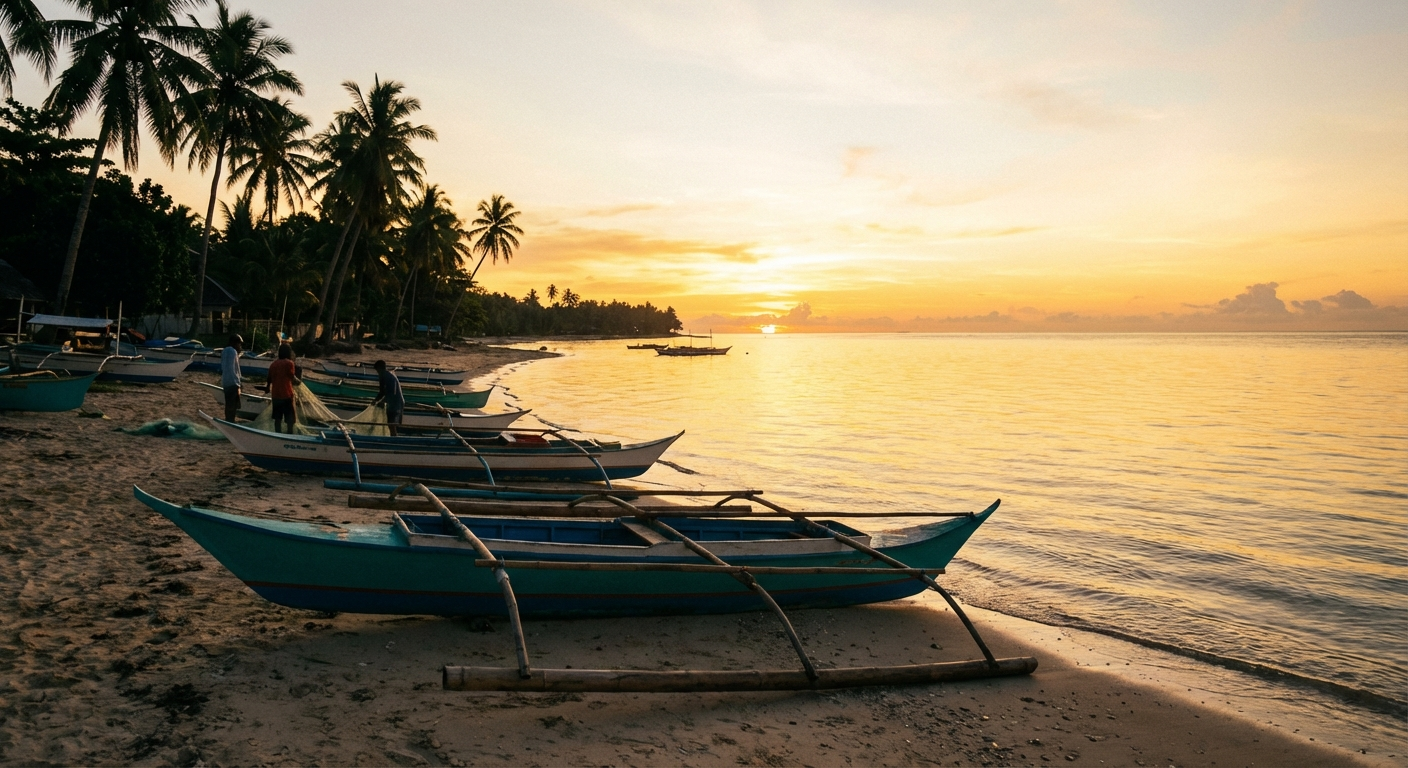
Siquijor Traditional Fishing: Ancient Methods and Coastal Heritage
Explore the traditional fishing practices of Siquijor Island, from handline fishing and fish corrals to the cultural heritage of coastal communities.
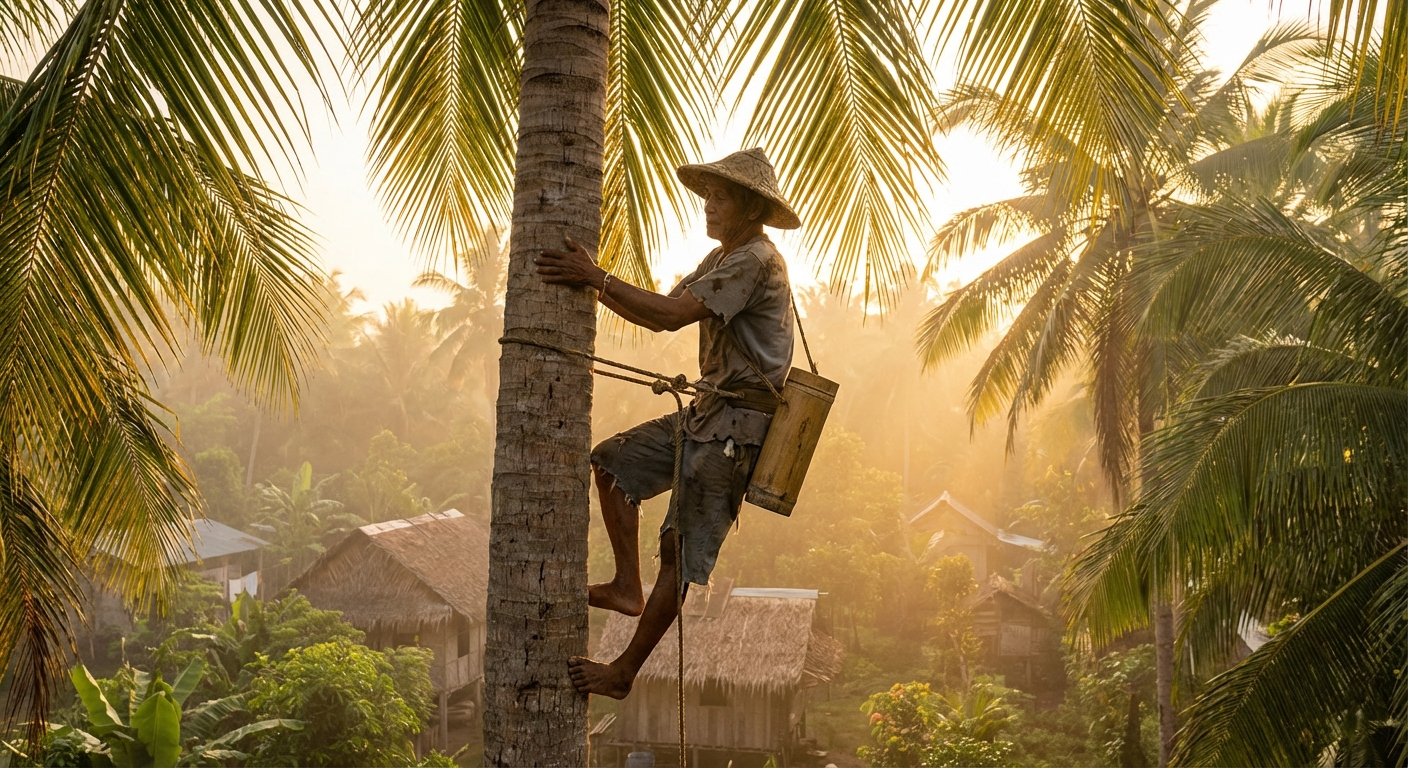
Siquijor Tuba: The Island's Living Coconut Wine Tradition
Explore the centuries-old tradition of tuba (coconut wine) making in Siquijor. Learn about the mananggete collectors, the production process, and where to experience this unique island drink.
Siquijor's Mananambal: A Respectful Guide to Healing Traditions
Understanding Siquijor's traditional healers (mananambal), their practices, history, and how visitors can respectfully engage with this living cultural heritage.