Siquijor Official Facts & Statistics: Everything You Need to Know
Essential facts about Siquijor Province - population, area, climate, municipalities, and practical visitor information from official government sources.
This quick reference guide provides official facts and statistics about Siquijor Province, sourced from the Provincial Tourism Office and Philippine Statistics Authority.
At a Glance
| Fact | Detail |
|---|---|
| Official Name | Province of Siquijor |
| Nicknames | Island of Fire, Mystic Island, Healing Island |
| Region | Central Visayas (Region VII) |
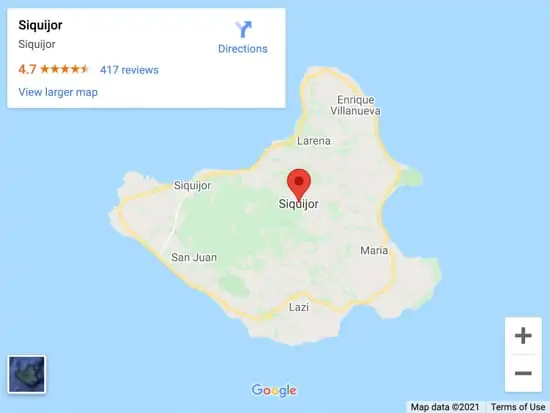
| Capital | Siquijor Town |
| Language | Cebuano (primary), Tagalog, English |
| Currency | Philippine Peso (₱) |
| Time Zone | PHT (UTC +8:00) |
Geography
| Measure | Value |
|---|---|
| Total Land Area | 343.50 square kilometers |
| Coastline | ~75 kilometers (circumferential road) |
| Highest Point | Mt. Bandilaan (557 meters) |
| Municipalities | 6 |
| Barangays | 134 |
Location
Siquijor is the third smallest province in the Philippines, located in the Central Visayas region. It sits in the Bohol Sea, with:
- North: Cebu and Bohol islands
- West: Negros Island (across Tañon Strait)
- South/East: Mindanao Sea
Population
| Census | Population |
|---|---|
| 2020 (PSA) | 103,395 |
| 2019 Tourist Arrivals | 168,366 |
Tourist Demographics (2019)
| Type | Number | Percentage |
|---|---|---|
| Foreign | 85,713 | 51% |
| Domestic | 82,653 | 49% |
| Total | 168,366 | 100% |
The Six Municipalities
| Municipality | Population (2020) | Area (sq.km) | Key Feature |
|---|---|---|---|
| Siquijor (Capital) | 28,915 | 90.70 | Main port, provincial capital |
| Lazi | 22,488 | 70.64 | Music Town, Cambugahay Falls |
| San Juan | 16,363 | 44.37 | Tourism center, beaches |
| Larena | 14,454 | 49.81 | Commercial hub, former capital |
| Maria | 14,385 | 53.37 | Salagdoong Beach |
| Enrique Villanueva | 6,790 | 28.60 | Traditional culture, bakeries |
Climate
| Factor | Information |
|---|---|
| Climate Type | Tropical |
| Average Temperature | 28°C |
| Wet Season | June - October |
| Dry Season | November - May |
| Best Visit Period | December - May |
Pro Tip
Due to climate change, weather patterns can vary. The rainy season can sometimes be hot, and vice versa. Always check forecasts before traveling.
Festivals
| Festival | Date | Municipality | Celebration |
|---|---|---|---|
| Kan-anan ni Juan | May 1 | Larena | Culinary festival |
| Cano-an Festival | May 2-3 | Larena | Town fiesta |
| Saging Festival | May 15 | Lazi | Banana products |
| Lubi Festival | 3rd week May | Maria | Coconut products |
| Bugwas Festival | August 28 | San Juan | Water/harvest |
| Dilaab Festival | October 4 | Siquijor | Fire/firefly heritage |
Historical Timeline
| Year | Event |
|---|---|
| 1565 | Spanish expedition discovers Siquijor (named “Isla de Fuego”) |
| 1783 | First parish (Siquijor) established |
| 1783-1877 | Additional parishes founded |
| 1854-1892 | Administered under Bohol |
| 1892 | Became part of Negros Oriental |
| 1901 | Made sub-province of Negros Oriental |
| Sept 17, 1971 | Created as independent province (RA 6396) |
| 1972 | Capital moved from Larena to Siquijor Town |
Practical Visitor Information
Getting There
| Route | Type | Duration |
|---|---|---|
| Dumaguete → Siquijor Port | Ferry | 1-1.5 hours |
| Tagbilaran (Bohol) → Larena | Ferry | ~2 hours |
| Cebu City → via Dumaguete | Ferry + Ferry | 4-5 hours |
Money
- Currency: Philippine Peso (₱)
- USD: Accepted by authorized money changers
- ATMs: Available in Siquijor Town and Larena
- Credit Cards: Limited acceptance (cash recommended)
Money Tip
Transact only with authorized money changers to maximize the value of your currency exchange.
Communication
- Mobile networks available (Smart, Globe)
- WiFi at most hotels and cafes
- Signal can be spotty in remote areas
Important Reminders
Zero Waste Province
Siquijor has banned single-use plastics. Please:
- Bring your own water tumbler
- Segregate and dispose waste properly
- Use eco-friendly products
Other Rules
| Rule | Details |
|---|---|
| Face Masks | Observe health protocols in public |
| Traffic | Obey rules and speed limits |
| No Smoking | Prohibited at beaches and public places |
| Valuables | Keep attended at all times |
| Dress Code | Appropriate attire for churches, banks, markets |
Contact Information
Provincial Tourism Office
| Contact | Information |
|---|---|
| Phone | 0955 370 6991 |
| siquijortourism@gmail.com | |
| Email 2 | siquijor_pto@yahoo.com |
Provincial Tourism Officer
| Contact | Information |
|---|---|
| Name | Atty. Dale Louis D. Tudtud |
| Phone | 0917 866 7004 |
| louisdaletudtud@gmail.com |
Origin of the Name
Several legends explain Siquijor’s name:
-
King Kihod - Legend tells of an ancient ruler whose name evolved into “Siquijor”
-
Katugasan - Old residents called the island after the Molave (“tugas”) trees covering its hills
-
Sequor - A priest returning from the island told people in Bohol he had been “Sequor” (following the waves), which was misheard as “Siquijor”
-
Isla de Fuego - Spanish name meaning “Island of Fire” due to fireflies illuminating molave trees at night
Why “Healing Island”?
Since ancient times, Siquijor has been known for traditional healers (mananambal) and folk medicine practices. Visitors still come to:
- Witness preparation of traditional brews
- Experience the medicinal powers of local herbs
- Seek help for various health concerns
- Obtain traditional potions for love and favor
Above all, it’s the Siquijodnon’s welcoming smile and warmth that make every visitor’s stay delightful and unforgettable.
This information is sourced from the Provincial Tourism Office of Siquijor. For the most current data, contact the tourism office directly.